Solution to reduce infrastructure’s contribution to CO2e emissions

Climate change is a global challenge, and it is clear that we are not doing enough. The G20 countries account for ~80% of the world’s CO2e (carbon dioxide equivalent) emissions. Each country’s contribution to CO2e emissions is shown in Figure 1.
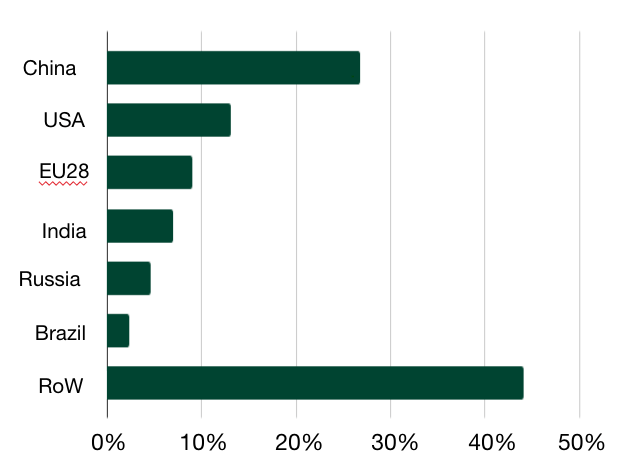
Figure 1
The world’s top four CO2e emitters (China, USA, EU28 and India) account for roughly 55% of CO2e emissions
Source: UN Emissions Gap Report 2019

The world needs to do more in the fight against climate change. We require an annual 7.4% reduction in CO2e emissions in order to meet the 2030 targets set by the Paris Agreement, which state that annual CO2e emissions should stand at 26 Gt; current annual CO2e emissions are 55.3 Gt. This is shown in Figure 2.
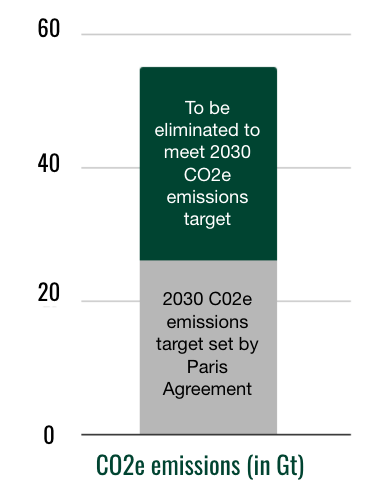
Figure 2
The world needs to cut its current annual CO2e emissions by half in order to meet the 2030 targets set by the Paris Agreement
Source: UN Emissions Gap Report 2019

Climate change, if unchecked, can lead to devastating consequences for the environment by the end of the 21st century, according to the UN Environment Programme and the Carbon Brief. > 70% of all coral reefs will die and there will be a 9% increase in ocean acidification (against 2005 levels), resulting in degraded ecosystems in the world’s oceans. Insects who help in pollination of crops and plants will see a loss in 50% of their habitats. There will be a rise in sea-levels by roughly 20 inches, leaving over 200 million people vulnerable to forced displacement.

Cement contributes to climate change and is key to physical infrastructure development

A significant, and often over-looked contributor to CO2e emissions is a key component of physical infrastructure: cement, which contributes to roughly 3% of global CO2e emissions. This is highlighted in Figure 3. CO2e emissions from cement production will need to fall by at least 16% of current levels by 2030 in order to meet the targets set by the Paris Agreement.
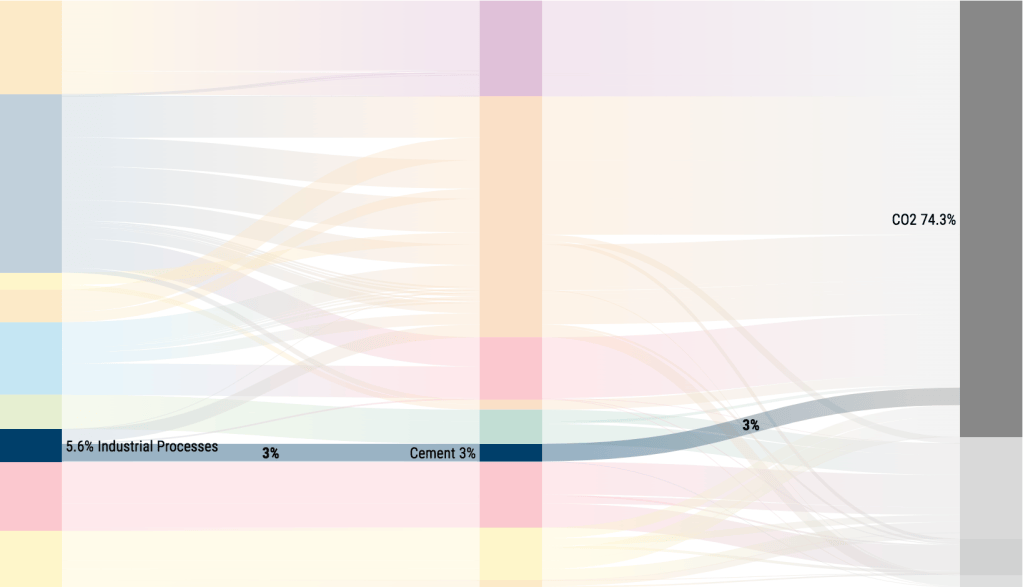
Figure 3
Cement contributes to 3% of global CO2e emissions
Source: World Resources Institute

There is a specific driver for the high levels of CO2e emissions associated with the cement production process: clinker production. Clinker is a solid, stony material and is the key constituent material of cement. Figure 4 details its position in the cement production process. Along with thermal combustion, roughly 90% of CO2e emissions in cement production can be traced back to clinker production.
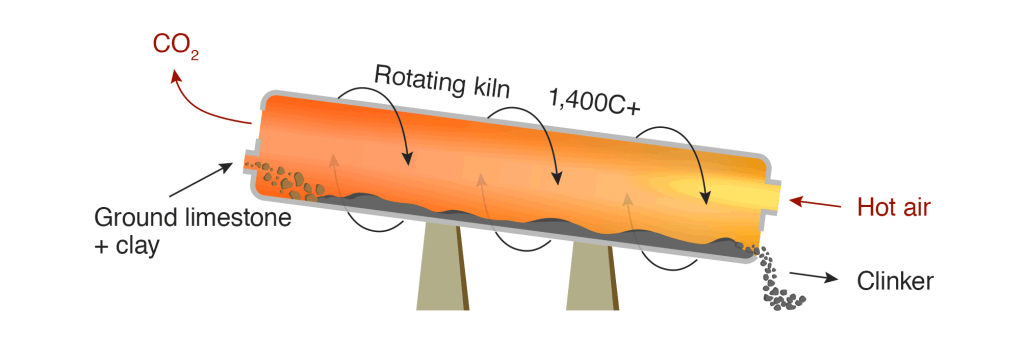
Figure 4
Clinker is a key product of the cement production process
Source: BBC News

Along with facing the global challenge brought on by climate change, the world – including both developed and developing countries – will see massive investments in infrastructure to better accommodate growing populations. According to the New Climate Economy report by the Global Commission on the Economy and Climate, $90 trillion will be spent globally through 2030 – 2/3rd of this in developing countries – exceeding the value of all current infrastructure stock.

Cement is perhaps the most crucial component to any physical infrastructure – buildings, roads and bridges. Thus, unlocking the low-carbon / green potential of cement is likely to yield significant financial and environmental returns, given the industry’s harmful effects on the environment. The same New Climate Economy report suggests that an economic gain of roughly $26 trillion can be realized if investments are made in low-carbon technologies and resilient infrastructure, rather than conducting business as usual.

CarbonCure offers a solution to unlocking concrete’s low-carbon, green potential

CarbonCure is the world leader in CO2 utilization technologies for the cement and the concrete sector. The firm seeks to introduce CO2 recycled from industrial emissions into the cement production process, with a mission of reducing CO2e emissions by 0.5 Gt every year. CarbonCure’s patented technology is retrofitted onto existing concrete plants, thus there is minimal incremental investment involved for incumbent cement / concrete manufacturers.

CarbonCure’s injection of CO2 in the cement production process leads to the formation of calcium carbonate. Calcium ions present in cement react with carbonate (CO2 injected into the wet concrete mix) to generate limestone (i.e., calcium carbonate). This is highlighted in Figure 5. Thus, CO2 is now trapped in this limestone mineral that becomes permanently embedded in concrete.
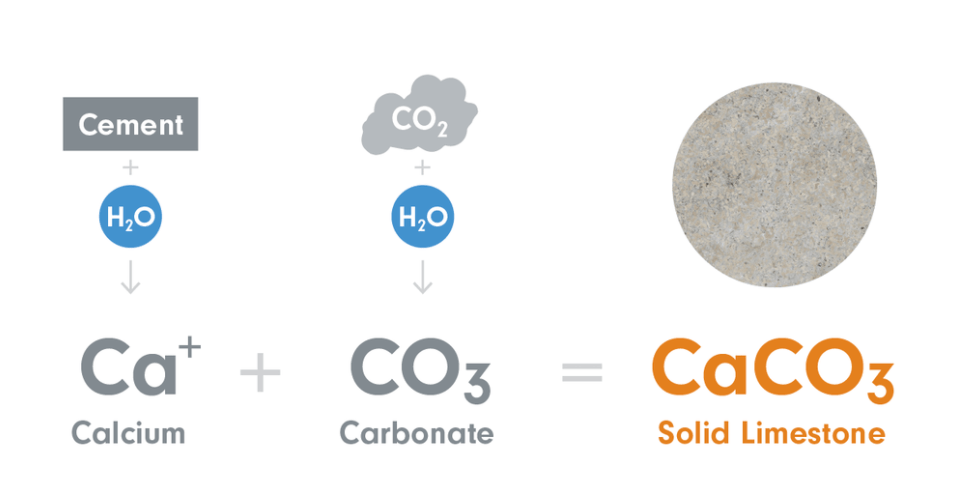
Figure 5
Calcium ions from cement react with carbonate (CO2 mixed in wet cement) to product calcium carbonate (i.e., limestone)
Source: CarbonCure

The company is backed by Breakthrough Energy, a global group of 28 high net-worth investors from 10 countries committed to funding clean energy companies. Breakthrough Energy was founded by Bill Gates, and has notable personalities on its board, including Mukesh Ambani, Jack Ma, Jeff Bezos, Richard Branson and Michael Bloomberg.

The OSD – IP debate with CarbonCure

As a for-profit company, CarbonCure is able to enjoy incremental growth by leveraging its patented technology. Such use of patents is often frowned upon by the broader open source community. However, I often hold a contrarian view on this, despite being an advocate of open source principles.

CarbonCure has introduced a revolutionary technology in the cement industry. Without protecting itself to ensure future growth by use of IP and patents, the company’s founders and their creative innovation would not have seen the same levels of success. It is very likely that giants in the mature cement industry, such as Lafarge and Heidelberg, would have replicated the technology in-house, if CarbonCure were to adopt a pure OSD approach. Thus, the use of patents and IP was necessary for the company to make its mark amongst the giants of the cement industry across the world.

Further, it is key to note that CarbonCure regularly release white papers and case studies on its website for the public. These detail specific use-cases for its technology and success in CO2e emissions reduction associated with these use-cases. Thus, despite not embracing OSD in its pure form, CarbonCure does adopt open source principles in order to regularly update the world on its progress in the fight against climate change.

The company’s hybrid OSD-IP approach is one that I believe may be the right way for younger companies to excel and find relevance in highly competitive industries. This is similar to my thoughts shared in the first blog post of this series. This is also similar to Professor Etienne‘s thoughts on Babylon Micro-Farms and their use of the hybrid OSD-IP approach.
Price guarantee to support COVID-19 vaccines

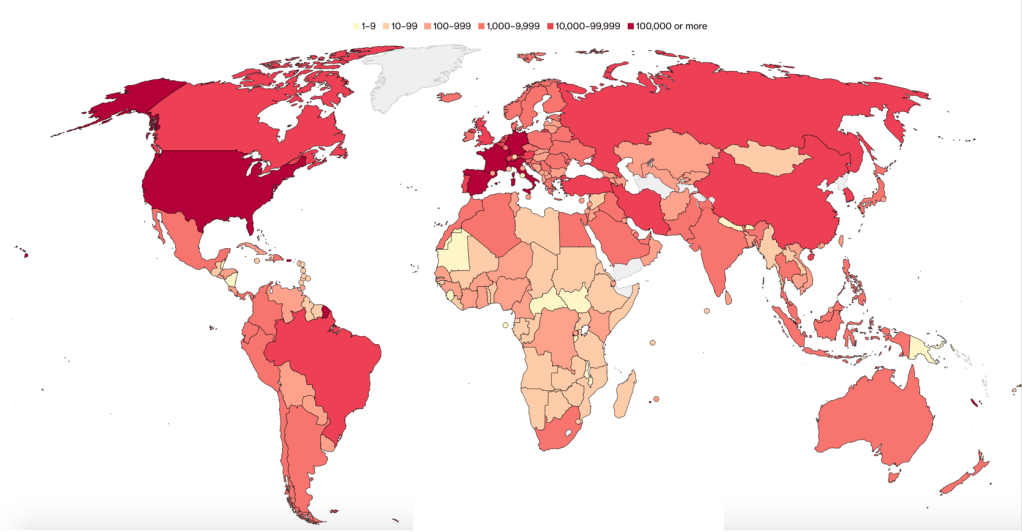
Coronavirus disease 2019 (COVID-19) is an infectious diseases caused by severe acute respiratory syndrome coronavirus 2 (SARS-CoV-2). COVID-19 first emerged in the Chinese city of Wuhan in December 2019, and has now infected 1.6 million individuals in 184 countries around the world (as of April 9, 2020). As Figure 1 shows, COVID-19 has disproportionately affected the United States and Western Europe, despite originating in China.

Figure 1
COVID-19 has spread rapidly across the world, affecting the United States and Western Europe more than its origin nation of China.
Source: Bloomberg

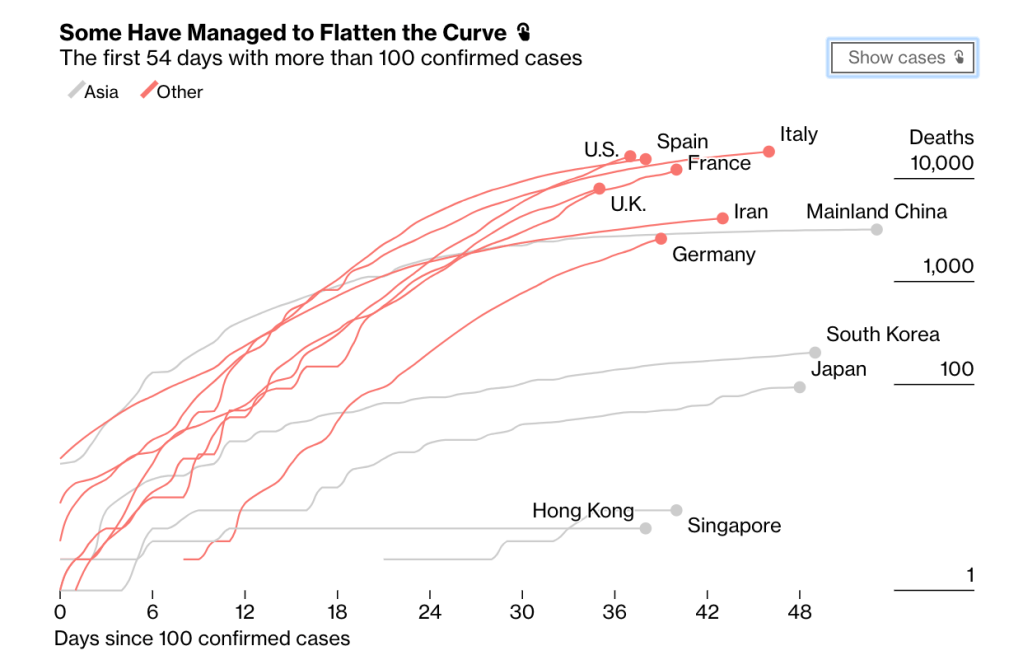
The spread of COVID-19 has increased exponentially during the month of March 2020. This is detailed in Figure 2. Thus, the virus has spread aggressively in the United States and Western Europe over the last 30 days alone. COVID-19 has only just started to spread to the developing world, including India, Latin America and Africa. It remains to be seen whether the virus can be curtailed in these regions.

Figure 2
COVID-19 has spread exponentially during the month of March 2020, recording a 10.3x increase in 30 days.
Source: Bloomberg

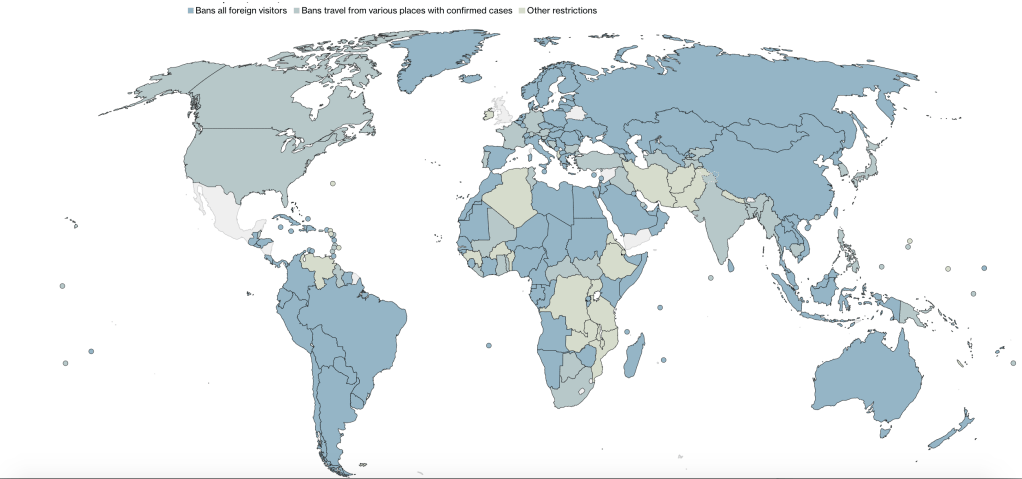
COVID-19 has had unprecedented, detrimental impacts on the world society and economy. The global death count stands at 95,506, with the United States accounting for 17% of all deaths (as of April 9, 2020). Countries all over the world have imposed travel restrictions in order to contain the spread of the virus, as shown in Figure 3. With 2.6 billion people (32.5% of the world’s population) under strict lockdown measures, COVID-19 will likely lead to the world’s worst recession since the Great Depression of the 1930s, according to the International Monetary Fund.

Figure 3
Countries across the world have imposed travel restrictions in order to curb the spread of COVID-19.
Source: Bloomberg

The central issue in the global fight against COVID-19 is the high degrees of uncertainty regarding the spread of the virus. This is primarily driven by the fact that the world is at least 18 months away from a COVID-19 vaccine. Thus, the only way for nations to limit the spread of the virus is through strict lockdowns, given the highly contagious nature of COVID-19. Such lockdowns will only push the global economy deeper into a downturn as long as these remain enforced.

This blog will explore how governments and multilateral organizations can support OSD health interventions during pandemics, within the context of COVID-19. Specifically, there is a significant opportunity for OSD principles to be leveraged in order to advance the development of vaccines and reduce their cost for end users.

Private companies drive up the cost of vaccines

Recent estimates suggest that the cost of developing an average vaccine – from research and discovery to product registration – lies anywhere between $500 million to $1 billion. The main driver of these high costs are the research and development (R&D) expenses that are incurred by private pharmaceutical companies. This is also the most frequently publicly-cited reason by these firms for high prices of vaccines.

It is key to note the crucial role that taxpayers play in R&D in the pharmaceutical industry. The National Institute of Health (NIH) spends $40 billion annually on health innovation that is driven by the private sector. In fact, NIH funding contributed to the development of each of the 210 new drugs approved by the Federal Drug Administration from 2010 to 2016. Despite leveraging taxpayer money for R&D, drug and pharmaceutical companies repeatedly disavow efforts to make vaccines affordable and accessible to the general public. This is primarily due to the strong pharmaceutical lobby that dictates healthcare policy in the US. A recent example of the lobby’s influence can be seen in Health Secretary Alex Azar’s refusal to promise that COVID-19 vaccines would be affordable.

Inability to access vaccines will hurt millions

The lack of affordable vaccines has serious implications for the health and wellbeing of Americans in light of COVID-19, as well as for the global efforts to curb the spread of the virus. As the New York Times details, COVID-19 tests are free across the US and some insurers in certain states are waiving the costs of COVID-19 treatment. Thus, individuals covered under Medicare or Medicaid, and those who qualify for insurance under the Affordable Care Act are likely to face little or no medical bills related to COVID-19. However, questions do remain on how much the roughly 30 million uninsured individuals will need to pay for COVID-19 treatment.

COVID-19 will also soon remind the world of the many inequalities that exist between nations, as the virus continues to spread in the Global South. 900 million people are at risk from the coronavirus in the world’s least developed countries (LDCs). Countries like India, and regions such as Latin America and Africa will need the most medical and economic support. Unlike in the United States, many governments in these regions cannot afford to support their economies for extended periods of time. For example, the IMF recently announced that Zimbabwe’s foreign exchange reserves were only sufficient enough for one week’s worth of imports. It is key to note that vaccine coverage, in general, tends to be closely linked to socioeconomic status. This means that poorer countries already start at a much lower baseline on vaccine coverage compared to the developed world.

Lack of economic incentives restricts development of vaccines for pandemics

From the sections above, we see that the inability to access affordable vaccines will leave millions in the US and around the world vulnerable to the risks of COVID-19. This will likely continue the rise in the number of cases and deaths associated with the coronavirus.

The root cause of this issue is the lack of incentives for pharmaceutical companies to invest in affordable vaccines. Recent history shows that vaccines for outbreaks such as Ebola and Zika were developed well-after these outbreaks were brought under control. As a result, drug companies lost money over vaccines developed for these outbreaks. This likely reduces the economic incentives that pharmaceutical companies have today to develop vaccines for COVID-19. Regulatory and public pressure to provide affordable vaccines further reduces such incentives. The result is a significant underinvestment in vaccines that will lead to huge societal benefit.

COVID-19 vaccine price guarantee as a solution

DeMarzo et al propose a unique, OSD-driven intervention to ensure that pharmaceutical companies have the right economic incentives to develop vaccines for COVID-19. Their proposal looks at a price guarantee from the United States government for COVID-19 vaccines. This will ensure that pharmaceutical companies will recover their R&D costs on such vaccines. This price guarantee will alter the risk-reward dynamic for pharmaceutical companies, and will serve as an effective economic incentive for these firms to direct all resources to develop a COVID-19 vaccine. Price guarantees will also enable open access to vaccines for all individuals in the United States, irrespective of socioeconomic status or insurance coverage status.

The United States government will not lose from such an intervention. The cost of this price guarantee will be instantaneously recovered as the economy returns back to normal once vaccines are administered across the country. For instance, let us assume that the price guarantee by the US government will stand at $250 per vaccine dosage, amounting to $80 billion to vaccinate the entire country. This amounts to roughly two weeks of lost economic output in the US, under very conservative estimates, which will be soon recovered once the economy returns to normal conditions.

The concept of this price guarantee can be extended to include contributions from governments around the world, such as those in Europe. Multilateral organizations, particularly the World Bank and the World Health Organization, can contribute to this price guarantee on behalf of countries in the developing world. Once again, there will likely be no economic loss to this contributions, as the world economy’s resumption of normal activities will soon cancel out the costs associated with the price guarantee. Most importantly, individuals in the world’s poorest regions will be guaranteed open access to vaccines.

Critics to the price guarantee approach may point out how this may be a violation of free markets. While there may be some merit to this argument, it is key to note that governments, central banks and multilateral organizations are being forced to participate in free markets to protect lives. Big government is back, and may in fact be here to stay. COVID-19 presents an unprecedented threat to life as we know it and we must be prepared to implement unorthodox solutions to mitigate this threat.

Open communication as a public good

Telecommunication refers to the exchange of information by electronic and electrical means over a significant distance. There are two broad forms of telecommunication, as classified by the telecommunications (telco) industry: voice and data. Voice refers to the communication of sound over a distance using wired or wireless telephones and related technology. Data, as the name suggests, refers to communication using internet and data services technology.

According to Wikipedia, open communication refers to the ability for individuals to access and share communication resources freely. This blog post seeks to advocate for the open access to both voice and data communication services around the globe. Such open access has the ability to truly transform the day-to-day lives of billions of individuals, as we will explore below.

Technology drives cheaper voice and data

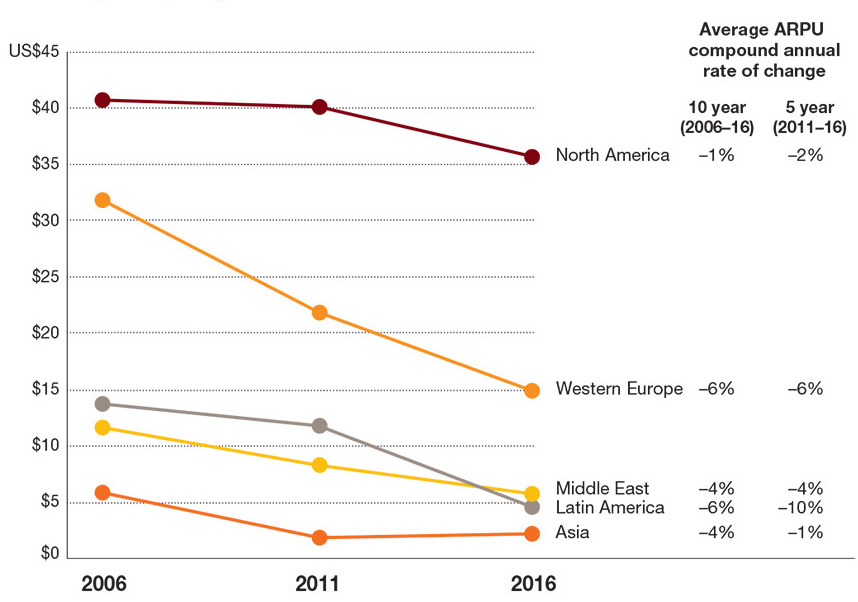
Average revenue per user (ARPU) is a key operational metric used by telco companies to measure firm performance. ARPU is calculated by dividing total revenue by total number of telco subscribers / users. In the 2000s and 2010s, as data from 2G and 3G services became more mainstream, the telco industry saw voice ARPU decline, while data ARPU grew. For example, South Africa saw a 10% decline in traditional voice revenue as data applications (e.g. WhatsApp) are substituting for voice.

More recently, however, several countries across the globe have seen ARPU from both voice and data have continue to decline. Figure 1 shows this decline over the 10 year period from 2006 – 2016.

Figure 1
ARPU has been declining across the globe due to technological advancements
Source: PwC
Note: graph does not include information on Africa

It is key to note from Figure 1 that North America has seen the least decline in ARPU between 2006 – 2016. This may in fact be due to the oligopoly nature of the telco market in the United States, where both regulators and private companies collude to ensure that ARPU declines are less drastic compared to those in other regions around the globe.

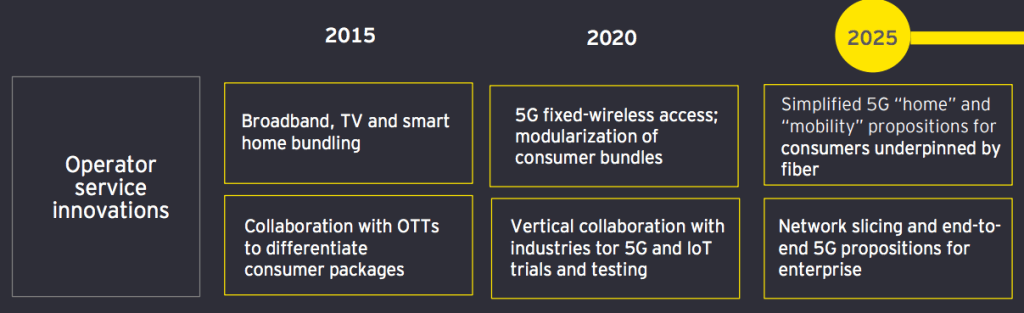
Declines in ARPU are driven by advances in technology, which create a unique, double-edged sword for telco companies. As customers demand improvements in speed, latency and coverage, telco companies are forced to respond with improved products backed by technological advancements. However, the efficiencies of such advancements drive ARPU down, as both voice and data become cheaper. Also, video content and social media are replacing voice for how people communicate. Thus, we increasingly find telco companies offering value-added services (VAS) beyond their traditional product mix of voice and data in order to offset this decline in ARPU. Looking ahead, ARPU from voice and data is only projected to decrease further as the benefits of the Fourth Industrial Revolution (4IR) kick in. Figure 2 highlights EY’s view on what the telco industry will look like in 2025 under the 4IR.

Figure 2
EY’s view on how the telco industry will provide differentiated VAS under the 4IR
Source: EY

From the above, we conclude that telco companies will soon see ARPU from voice and data collapse to near-zero levels due to further technological advancements. This will likely be driven by the benefits of the 4IR (particularly 5G), and is an inevitable future view of the industry. Telcos that embrace free voice and data, and offer unique, differentiated VAS, will continue to succeed in the 4IR world.

Open access to voice and data must be a fundamental human right

The United Nations’ Universal Declaration of Human Rights (UDHR)is a “common standard of achievements for all peoples and all nations” and sets out, for the first time, “fundamental human rights to be universally protected”. The UDHR was first proclaimed in Paris in 1948. According to Article 27 of the UDHR, “everyone has the right freely to participate in the cultural life of the community, to enjoy the arts and to share in scientific advancements and its benefits”.

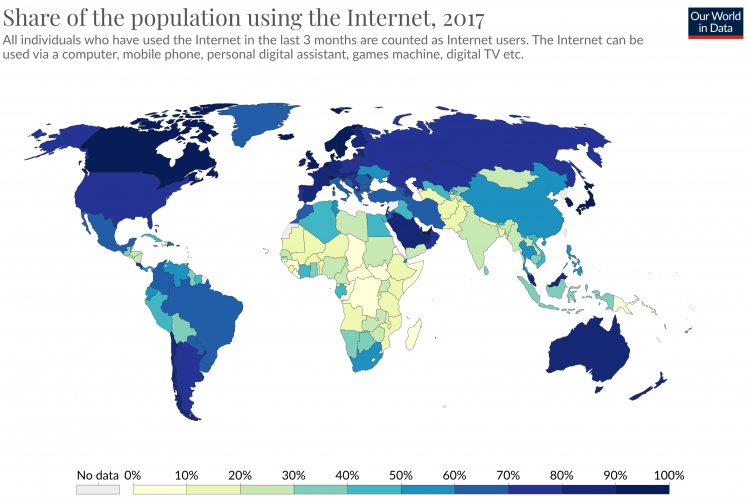
As detailed in this blog by Scott Edwards of Amnesty International, access to communication technologies must be thought of as a fundamental human right. While Edwards’s blog focuses more specifically on internet access, the same argument holds true for access to voice and data technologies. In fact, data services are essentially internet access on mobile phones. These Information Technologies are essential for individuals in the 21st century to enjoy basic fundamental rights including health, education and employment. Open access to voice and data will likely boost the number of individuals who have regular access to the internet. Figure 3 highlights regular internet access by country around the globe. By accessing the internet more regularly, individuals will be able to enjoy benefits of better life outcomes, including equity within communities.

Figure 3
Share of population, by country, that uses the internet
Source: Our World in Data

Thus, there are several societal benefits to individuals’ open access to voice and data communication. This, in addition to the fact that near-zero ARPU will be the new norm (see previous section), supports the rationale for open voice and data.

Private telcos and regulators are key to success

Every open access solution has certain nuances / factors that will ensure its success. In the case of open communication, this takes the form of private telcos and regulators, as explained below.

First, it is unlikely that an OSD-powered solution for open communication will succeed. This is because of the high potential for bandwidth and capacity issues associated with OSD solutions. These issues, particularly user entitlement, have been highlighted in my first blog of this semester. Thus, it is likely that private telco companies will need to drive the open communication movement. This is not necessarily a bad outcome. Private telcos currently have access to the required infrastructure to accommodate increased bandwidth and capacity associated with open communication. There may be room for the government / public sector to nationalize voice and data services, while the private sector focuses on providing unique VAS. However, this will likely be opposed in the West due to anti-socialist sentiments.

Second, regulators will need to play a key role in pushing private telcos to adopt open communication. This will be done only if regulators prioritize the welfare of consumers over the profits of private telcos. This will also ensure fairer competition in the largely oligopolistic telco market in the United States.

Open source as a tool to improve agriculture in Sub-Saharan Africa

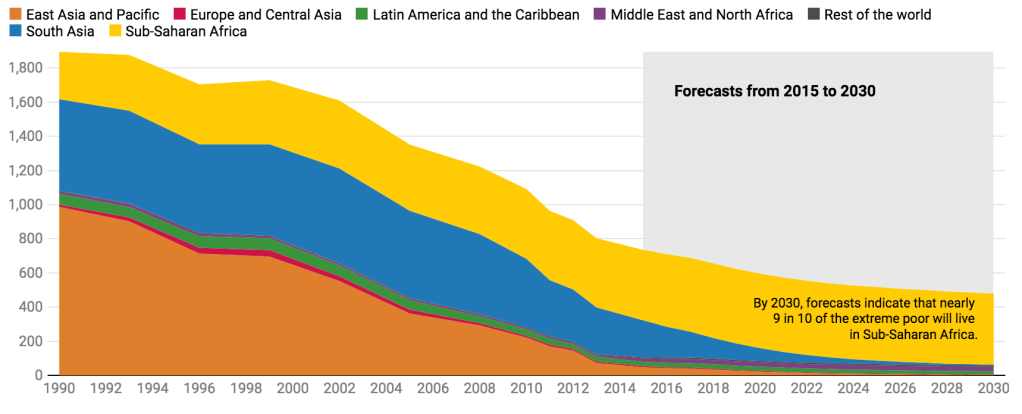
Poverty continues to be a critical issue facing Sub-Saharan Africa (SSA). This is the region that lies below the Saharan desert and includes 46 African countries; countries lying in North Africa are excluded. Estimates indicate that by 2030, despite improvements in the global fight against poverty, 9 of 10 extremely poor people will live in SSA (see Figure 1). The extreme poor are defined as individuals who live below $1.90 or less per day.

Figure 1
By 2030, forecasts indicate that nearly 9 in 10 of the extreme poor will live in SSA
Source: World Bank

This blog discusses the structural economic problems that SSA faces and how open source can improve agricultural productivity in the region in order to mitigate these problems.

SSA faces structural economic problems

Nearly 54% of the working population in SSA is reliant on agriculture as their primary source of employment. However, agriculture only contributes to roughly 16% of the region’s GDP. There is a clear gap between employment and economic value creation. It is unlikely for SSA’s reliance on agriculture to decrease in the short and medium-term. Both manufacturing and service sectors will see significant decreases in labor intensity, driven by automation, 5G and the Fourth Industrial Revolution. Thus, agriculture will likely continue to employ a significant proportion of the SSA population in the medium-term.

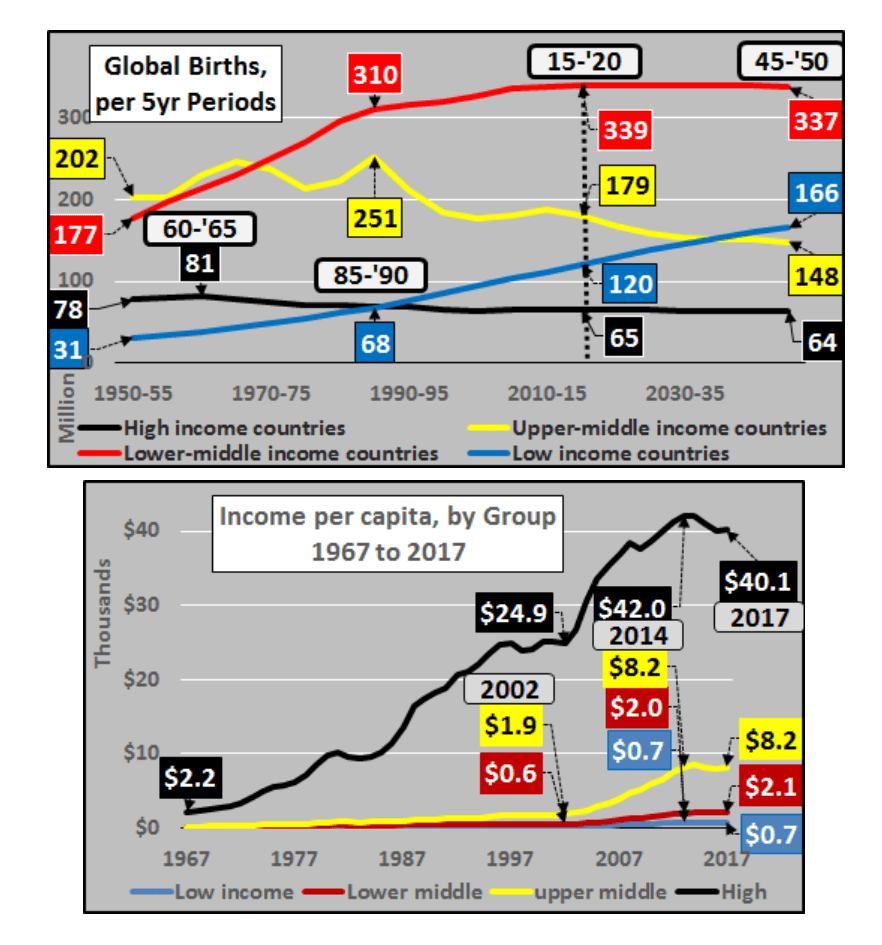
Additionally, SSA is likely to face significant economic growth hurdles in the future, as explained by Chris Hamilton. Global population growth is forecasted to be driven primarily by countries in SSA (notable exceptions include South Africa). However, despite driving population growth, SSA will struggle to achieve per-capita economic growth required to support a growing population (see Figure 2). There are many drivers which limit per-capita economic growth in SSA, such as inefficient capital allocation. It is important to note that a country’s per-capita economic growth must at least match or exceed population growth to ensure sustainable economic growth over time. Further, as countries around the world grow and achieve developed-economy status, their economic growth rates will continue to decline. Thus, the onus lies with low-income regions like SSA to ensure that global economic growth can be sustained and even increased in the future.

Figure 2
Despite driving global population growth, SSA will struggle to achieve economic growth per capita required to ensure sustainable economic growth over time
Source: Chris Hamilton

From the above arguments, we can conclude that strong improvements in the economic productivity of agriculture will significantly boost SSA’s per-capita economic growth. This will help support global economic growth going forward. Before exploring potential solutions, we will explore the challenges faced by smallholder farmers (SHFs) that limit SSA’s agricultural productivity.

SHFs in SSA suffer from a lack of information

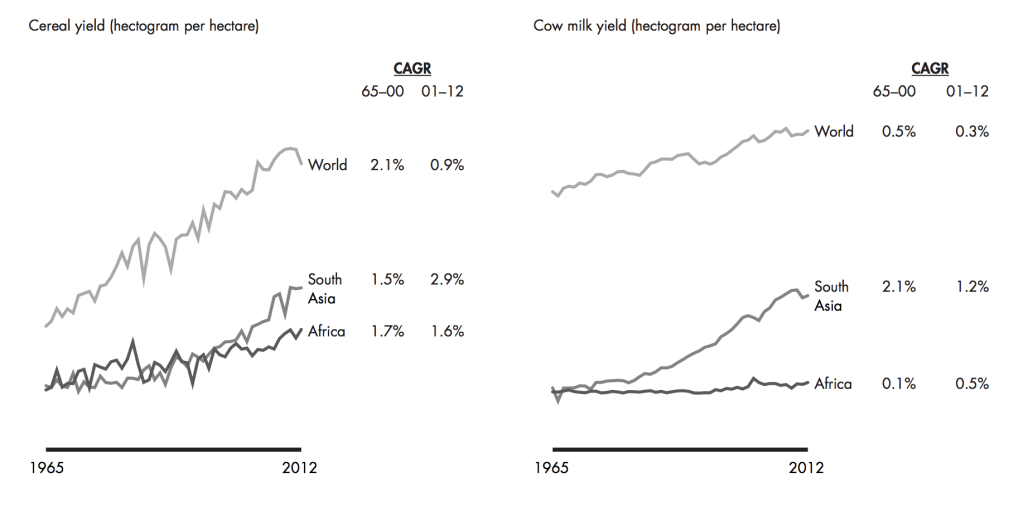
Opportunities for SHFs are often limited due to inefficient agricultural practices as well as a lack of coordinated efforts amongst themselves. Inefficient agricultural practices, motivated by traditional farming methods, do not offer sufficient yield to support a growing population, especially in light of the effects of climate change. As a result of these low yields, agriculture in Africa remains far less productive than the world average (see Figure 3). This has serious implications going forward: Africa will be unable to feed its own growing population, and will need to resort to expensive imports, creating a deeper dent in the region’s economic growth. There is also a lack of coordination amongst SHFs to align production to meet rising crop demand. This is primarily driven by the fact that SHFs in developing regions, by definition, are characterized by a high degree of geographic dispersion.

Figure 3
Agriculture in Africa remains far less productive than the world average
Source: Acumen

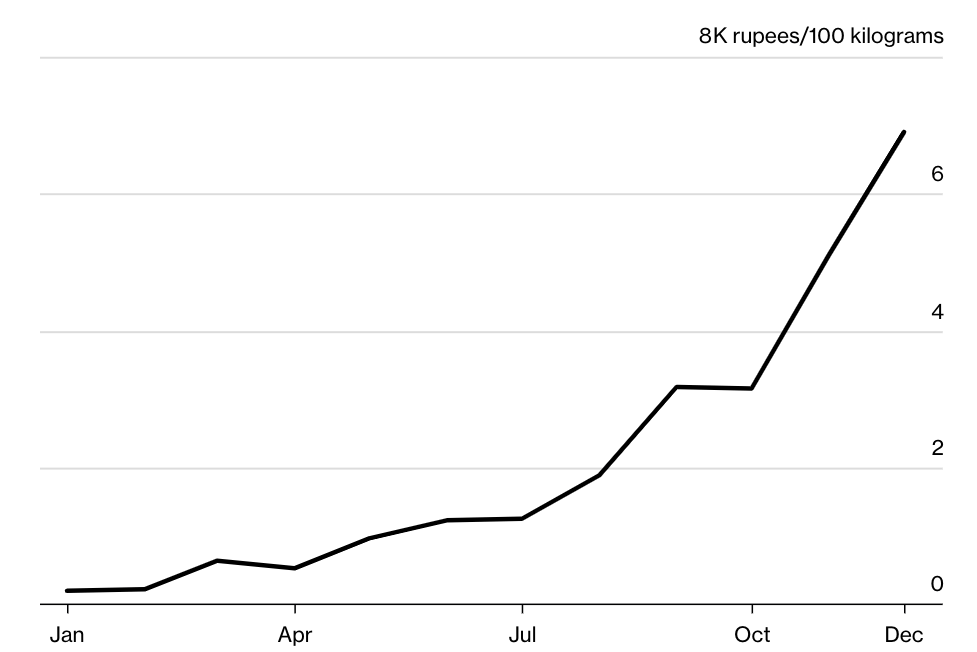
It is key to note that both factors identified above have a common root cause: inadequate access to relevant information. Examples include information on weather patterns, planting cycles and competitive prices for harvests. This creates a knowledge gap, which further reinforces the first two challenges. This knowledge gap can be detrimental to SHFs, particularly as the effects of climate change continue to unwind. A key example of this is seen in the near 200% rise in onion prices in India brought on by massive flooding during the 2019 monsoon season (see Figure 4).

Figure 4
Exponential rise in onion prices in India was driven by supply shortages due to massive flooding
Source: Bloomberg

Thus, there is a clear need for the agricultural sector in SSA to contribute more towards the region’s economic growth. Offering SHFs access to information, based on open source principles, will put them in a better position to improve their economic productivity from agriculture. Aclímate Colombia serves as a successful example that effectively leverages such an open source tool.

Aclímate Colombia: an open data success story

Aclímate Colombia is a cross-sector initiative led by the International Center for Tropical Agriculture (CIAT). CIAT involves both private and public sector participants, and is key in securing necessary buy-in from corporates. The initiative seeks to promote open access to data for SHFs involved in rice cultivation. Rice productivity in Colombia had decreased from 6 to 5 tons per hectare, primarily driven by climate change. Without a successful intervention, rice yield in Colombia is likely to have continued this downward spiral, hurting hundreds of farmers. However, Aclímate Colombia’s success prevented this from happening. In fact, estimates suggest that some $300M in losses amongst 179 farmers were avoided by successfully leveraging open data from this initiative. One can only imagine the economic benefits that can be realized by SSA’s 33 million SHFs!

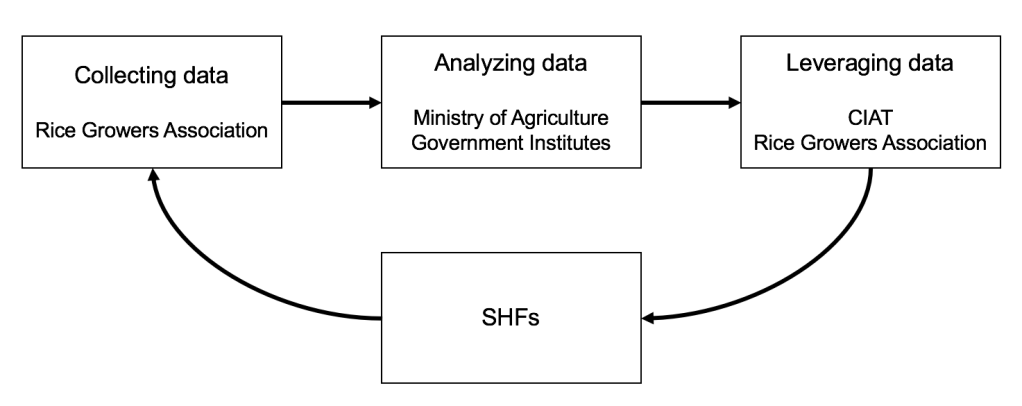
There are several key stakeholders involved in ensuring Aclímate Colombia’s success along each step of the initiative, as illustrated in Figure 5:

Figure 5
Several key stakeholders contribute to Aclímate Colombia’s success along each step of the initiative
  • Collecting data: this is conducted at the farm-level, where the Rice Growers Association is able to tap into its vast network of rice-farmer cooperatives
  • Analyzing data: this is led by government departments, agencies and institutes and ensures that farmers’ data is kept out of private hands
  • Leveraging data: this is done by CIAT to ensure private sector buy-in, and also by the Rice Growers Association to deliver insights directly to farmers

It is key to note that open-source principles exist within each step of the process highlighted in Figure 5. This is key to ensure that data collected at the farm-level is made open for analysis, and also open for interpretation and communication back to the SHFs. There is no intellectual property involved that seeks to monetize the farmers’ data.

Additional factors will reinforce success in SSA

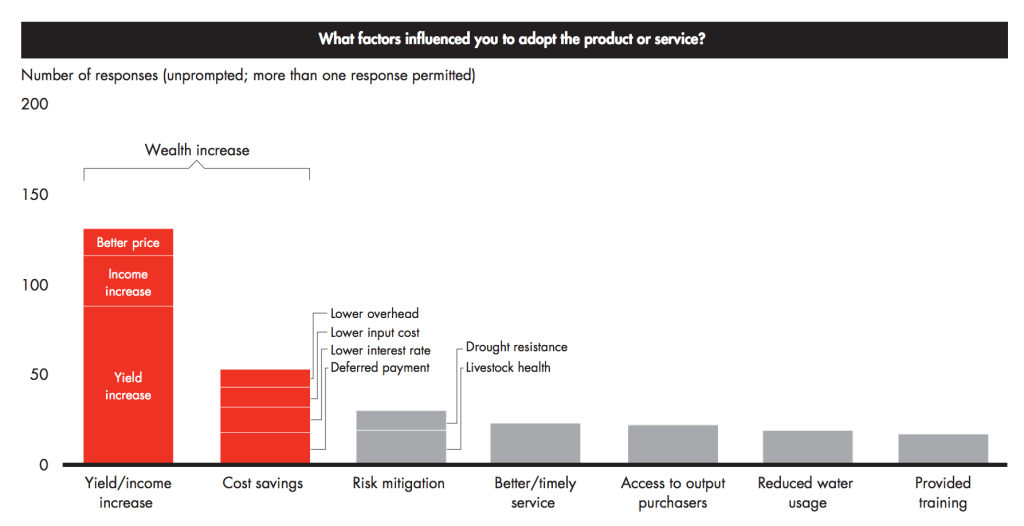
Buy-in from SHFs, the initiative’s primary beneficiary, is perhaps the most important factor that drives Aclímate Colombia’s success. Without this, the whole initiative would have failed. There are nuances involved when engaging with SHFs that will likely improve their adoption of such initiatives. As Figure 6 suggests, communicating the wealth increase benefits of interventions to SHFs will significantly improve their buy-in.

Figure 6
SHFs are more likely to adopt new interventions if wealth increase benefits are explicitly communicated to them
Source: Bain & Company

Additionally, the initiative must secure feedstock demand from both the private sector and the government. This will enable the open source tool to achieve scale, creating even greater economic benefits for SHFs. Finally, a comprehensive legal review must be conducted to ensure that data treatment does not violate the privacy rights of SHFs. Such laws may not exist in some countries and regions in SSA. A potential solution is to leverage best practices from more exhaustive and progressive data protection legislation, such as the EU’s GDPR.

Open source to reduce educational inequality in the United States

Educational inequality refers to the unequal access to education. There are multiple drivers for such inequality: policy in government, difference in schools attended by the child, family’s socioeconomic status and the race & ethnicity of the child. This blog will focus on how the difference in schools attended by the child drives educational inequality. Further, we will explore how open source education can provide an answer to a reduction in educational inequality.

The public school problem in America

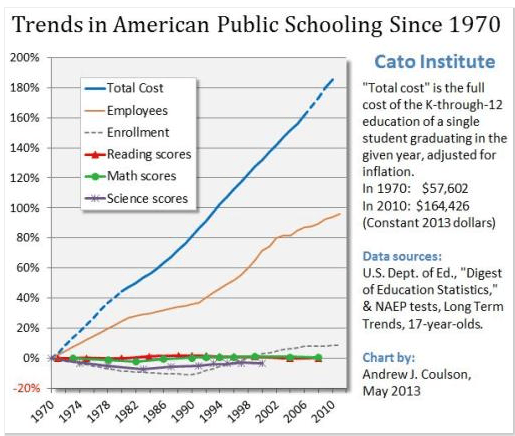
Public and private schools differ by source of funding. Private schools are funded by tuition, gifts, endowments, private corporations and fundraising events. Public schools are often funded by government taxes grants, awards and donations. Financing of K-12 education is almost shared equally by local and state governments, with the federal government covering less than 10 percent of the cost (Brookings). As with any sector with private and public players, one would expect the public sector to be more inefficient in achieving the same outcome. Unfortunately, this holds true in the case of education and is highlighted in Figure 1.

Figure 1
Despite rising costs, the public schooling system has hardly moved the needle in educational outcomes.
Source: Foundation for Economic Education

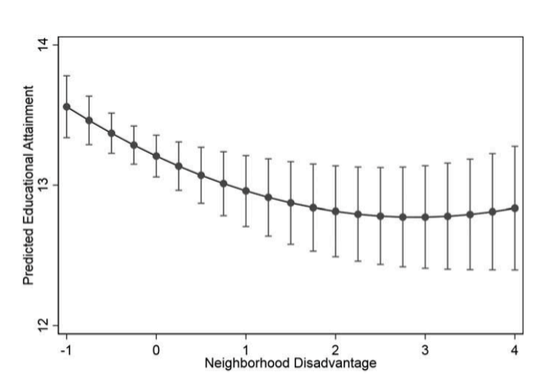
Public schools rely heavily on local government taxes as a funding source. This means that poorer neighborhoods are more likely to have lower-funded public schools compared to more affluent neighborhoods. This dynamic is also described in a widely-acclaimed Sociology paper by Professor Junia Howell, who states that “Educational inequality is driven by the compounding privileges of the most advantaged residents”. Findings from her research are shown in Figure 2, which shows a negative correlation between predicted educational attainment and neighborhood disadvantage. In other words, living in a neighborhood with lower number of disadvantages (represented on the x-axis) will likely lead to higher educational attainment (represented on the y-axis).

Figure 2
There is a negative correlation between predicted educational attainment and neighborhood disadvantage.
Source: Junia Howell

There is further evidence of this relationship. Nationally, high-poverty districts spend 15.6% less per student than low-poverty districts do. The results of such inequality are the following: lack of equal access to education, inadequate number of teachers, lack of academic and non-academic facilities and chronic absenteeism in poorer schools, just to name a few. Solving such discrepancies in funding can significantly improve a child’s life outcomes: a 20% increase in per-pupil spending each year for poor children leads to an additional year of education, 25% higher wages and 20 percentage-point reduction in the annual incidence of poverty (National Bureau of Economic Research).

It is interesting to note that the structure of the public school system dates back to colonial America (The Atlantic). Massachusetts set the tone for public schools to be financed by property taxes when the colony passed the Massachusetts School Law of 1647. The law stated that any town with 50 or more families were required to hire a teacher for children who would be paid via property taxes. This trend was revolutionary at the time, was picked up by other colonies, and still has its structure largely intact 373 years later. This clearly tells us that despite the best intentions of the legislature, policy is unlikely to bring about a change to the system.

In light of the above, we must come up with alternatives so that children attending public schools in poorer neighborhoods will have a better chance at success. Educational inequality is driven by the lack of access: how can we offer equal access to education to children in lower-funded schools? Open source education may just be the answer.

The open source solution

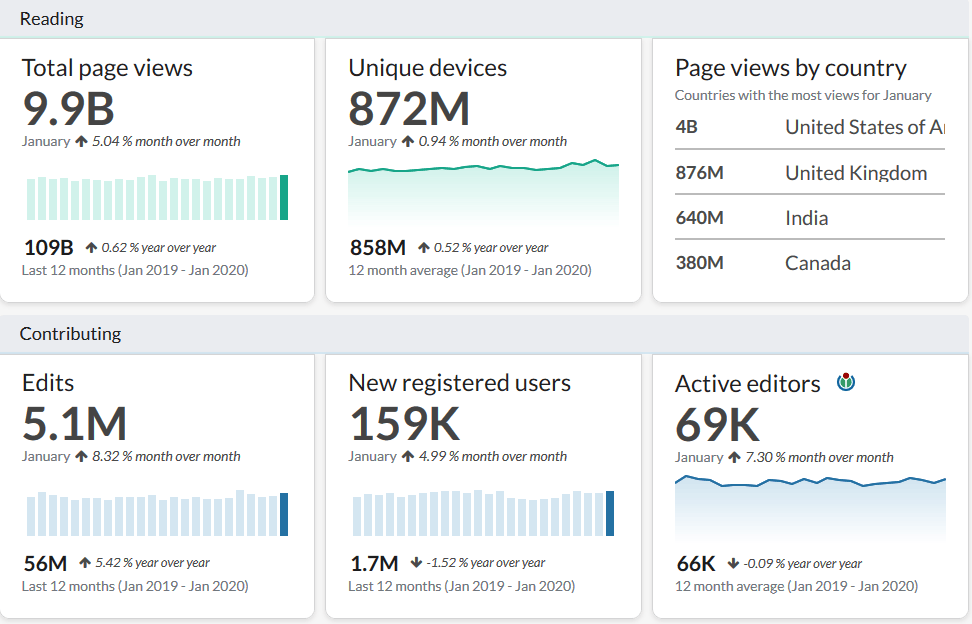
Open educational resources (OERs) may prove to be the answer to ensure a level-playing field for public schools in poorer neighborhoods. OERs are learning materials that can be modified and enhanced because their creators have given others permission to do so (Opensource.com). The world’s most popular OER is Wikipedia, which offers free content to each and every individual with access to the internet. Each of its five pillars enshrine the principles of open source. Figure 3 gives us insights into the impact Wikipedia has on the world. According to Lane Rasberry, UVA’s Wikimedian-in-Residence, Wikipedia is the fifth most visited website in the world, and the only non-commercial website within the top 10.

Figure 3
Wikipedia’s impact on the world
Source: Wikimedia

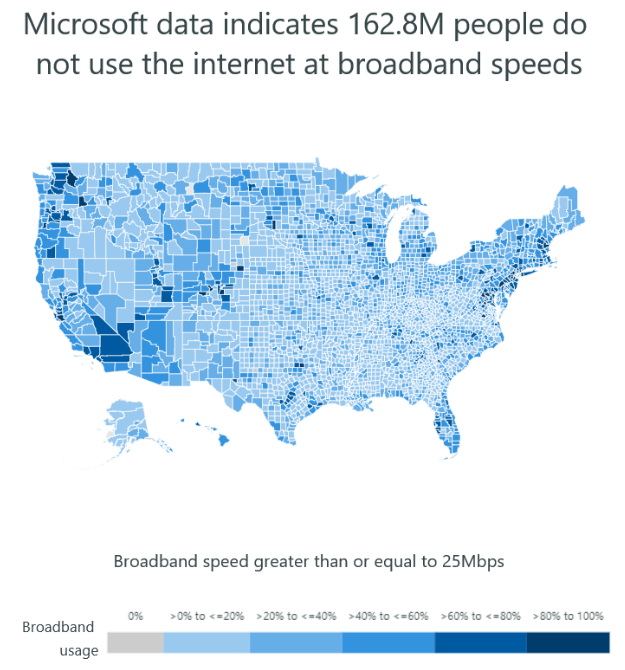
Despite being an online platform, Wikipedia strives to make itself available to individuals without internet access through its Internet-in-a-Box offering. Individuals can use their phone, laptop or computer to connect (via WiFi) to a wireless access point with storage. Content can be updated either by replacing the entire wireless access point, or only the storage, via a new memory card. This proves to be revolutionary to ensure equal educational access, even in a country like the United States. Internet penetration in the US currently stands at 87%, leaving some 45 million people without regular internet access. Further, as seen in Figure 4, there are access to broadband internet is uneven across the US; there appears to be discrepancies in the data from the Federal Communications Commission.

Figure 4
Broadband access is uneven across the United States.
Source: Microsoft

Despite its best intentions, OERs have their fair share of critics. These are often individuals and organizations who benefit from the status quo of unequal education access, as discussed in Tuesday’s lecture with Professor Etienne. A point often brought up by OER critics is the ability to manipulate content on OERs. This point is flawed. First, OERs are actively being edited by contributors (as seen in Figure 3) as well as automated bots (Lane Rasberry) who are responsible for ensuring that only neutral and accurate content is shared. Second, this point confuses OERs with open education, which often involves open access to education, irrespective of the ability to modify content and material (Opensource.com).

It is important to understand the slight nuance in the differences between OERs and open education. An example that further explains this difference is YouTube. Individuals can access educational videos on YouTube for free and are able to collaborate – via comments – on some videos; however, only the individual who uploads the video is able to modify it. This creates an issue for leveraging YouTube as an educational resource: there can be instances where false information or even disinformation can be promoted via so-called educational videos. This is what happened during the Russian disinformation campaign leading up to the 2016 general election in the United States (Politico).

Redirecting resources to OERs will ensure success

OERs can suffer from a lack of resources. As pointed out in my first blog post, open source solutions and platforms can offer suffer from a free-rider problem, where there are more individuals taking from open source than contributing. This can compromise the entire open source platform.

A solution to this problem is for governments and individuals to redirect resources (time and money) to OERs, who are likely to deliver content more effectively than existing resources, especially within lower-funded schools. For instance, Wikipedia receives annual contributions worth $100 million to fund its operations; 95% of this funding comes from individuals contributing $25 or less (Lane Rasberry).

How OSD and transactive energy will power the world

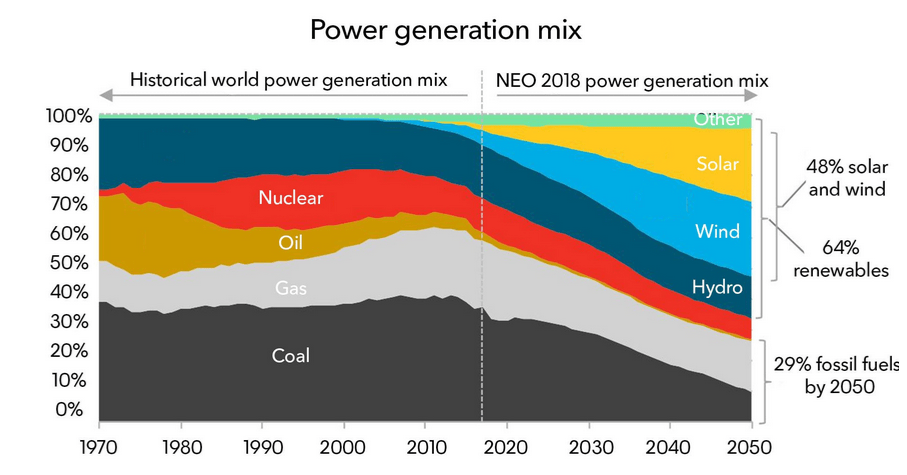
The Energy Information Administration (EIA) forecasts global energy demand to increase by 50% by 2050. This growth will primarily be led by growth in energy demand from Asia, with the continent’s population projected to account for 55% of the world’s population. Incumbent fossil fuel resources are unlikely to be the answer to meet this huge growth in energy demand, particularly in the face of growing awareness and evidence of the impacts of climate change. As the entire world makes achieving the goals of the Paris Agreement their top priority, we will see the rapid decline of fossil fuels in the global energy mix. Further, the growing adoption of renewable energy sources will put further downward pressure on fossil fuels. Since the 1970s, fossil fuels have made up 60% – 70% of the entire global energy sources mix. However, as Figure 1 shows, the days of the fossil fuel industry are numbered. Renewable energy sources are projected to make up about 65% of the global energy sources mix.

Figure 1
The world’s energy demand will rely less on fossil fuels and more on renewable sources.
Source: Bloomberg New Energy Finance

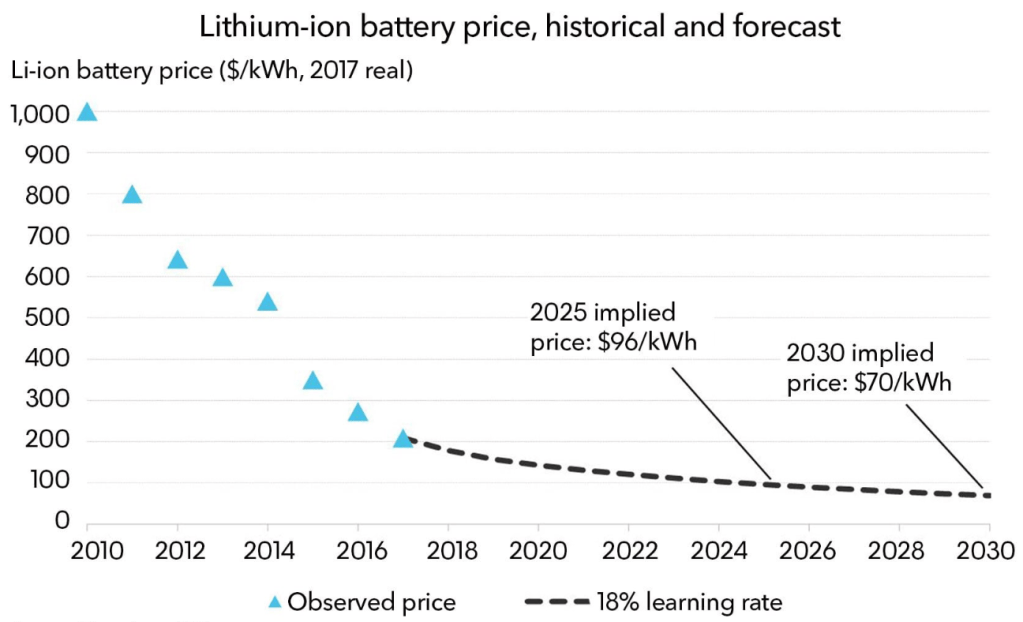
Despite rapid advances in battery and storage technology, we are still some years away from cost-effective storage solutions that will support large-scale renewable energy plants. As Figure 2 shows, the price of lithium-ion batteries may be cost prohibitive for households even in 2030. Thus, large-scale energy generation plants powered by renewable energy are likely to generate variable amounts of energy in the absence of cost-effective storage. This will make it difficult for utility companies to accurately forecast supply and demand for energy.

Figure 2
The price of lithium-ion batteries are likely to be cost prohibitive for households even by the end of this decade.
Source: Bloomberg New Energy Finance

We now face an interesting question: how can cities, regions and countries successfully accommodate the inevitable rise of renewable energy sources?

Transactive energy solutions built on OSD platforms will provide a scalable solution to successfully accommodate variable renewable energy supply across the world.

What is transactive energy?

As per the California Public Utilities Commission, transactive energy (TE) refers to “an intelligent-device-enabled grid where each device can utilize electronic signals in order to optimize allocation of resources subject to the constraints of the grid”. TE is not a new concept as wholesale energy markets currently adopt an approach of leveraging signals (usually by forecasting demand) in order to optimally allocate resources. However, the difference with TE is the extension of this concept to end consumers to participate directly in energy markets.

TE can be applied to a localized area, such as a neighborhood or community, or to an entire national grid system. In a localized area, TE adopts more of a peer-to-peer approach. Individual households can be both consumers (as per their traditional roles) as well as producers (often re-phrased as “prosumers”). Consumers and prosumers trade energy in an energy marketplace, which is often a digital / intelligent platform that is increasingly powered by blockchain. In some cases, consumers have the option to buy energy from incumbent utilities as well.

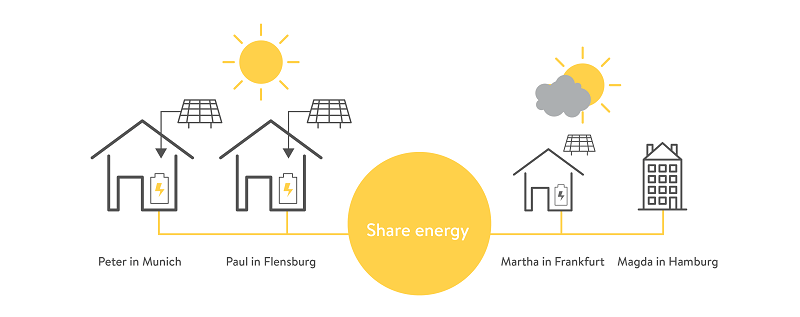
Thus, there is a key difference in energy distribution with TE. Traditionally, energy distribution was and largely continues to be unilateral, i.e., energy is distributed from a utility to end consumers. However, with TE, we will see a multilateral approach to energy distribution, where all parties in the grid will serve as consumers and producers, and where the price of energy is determined by a free and fair market system. This will lead to a democratization of the energy market, where current utility monopolies will no longer be able to dictate prices and may in fact even be phased out. An illustrative example of a TE market is shown in Figure 3.

Figure 3
TE will democratize the energy market.
Source: sonnen USA

Despite being a relatively new industry, TE is poised to see a huge growth for most of this decade; Navigant Research predicts that the TE market will grow by 153% through 2028 and reach $7.9B. However, these estimates assume an IP-oriented TE industry, which may in fact limit the size and scale of the TE market, as we will discuss in a later section.

Brooklyn Microgrid: a TE success story

Brooklyn Microgrid (BMG) is a TE project funded by LO3 Energy (LO3), that involves peer-to-peer solar energy trading. BMG has received significant praise and accolades for the role it has played in bringing the TE industry to the limelight. This has seen LO3 implement TE pilot projects in the UK, Colombia, Japan and Australia. Further, LO3 has received investments from two global energy giants: Royal Dutch Shell, Japan’s Sumitomo Corporation and Siemens. BMG has been at the forefront of tapping into emerging consumer trends: 69% of consumers are interested in having an energy-trading marketplace, while 47% of consumers plan to sign up for community solar projects.

BMG leverages the core concepts of TE identified in the previous section above. In addition, the BMG energy marketplace developed by LO3 leverages blockchain to support peer-to-peer transactions. As IBM points out, blockchain drives greater transparency, enhanced security and improved traceability. This is crucial to BMG’s success. Any product or service that seeks to disrupt the status quo must secure the trust of end users. Leveraging blockchain enables BMG to do so. In the absence of blockchain, users would probably still have a central authority – a pseudo-utility – that governs the marketplace. This would serve as a disincentive for end users and would likely limit adoption rates of TE.

OSD will unlock the true potential of TE

Exergy – the energy marketplace developed by LO3 that enables BMG users to trade with one another – is currently proprietary to LO3. As has been explained in my first blog post, such IP protection limits the spread of the benefits of this innovation. Specifically, IP-backed innovation is unlikely to be spread fairly to the developing world. This has serious implications for the energy industry; a significant portion of the developing world currently has no access to electricity – driving energy inequality – as seen in Figure 4.

Figure 4
A significant portion of the developing world lacks access to electricity.
Source: Our World in Data

TE’s promise to democratize energy will achieve monumental impact in the developing world. The number of people gaining access to electricity has been growing around 118 million each year since 2010. However, this pace is slowing as those without energy access are either remote or poor, or both. By leapfrogging energy distribution through utilities, the developing world will be able to leverage TE to ensure local access to energy at fair prices for all. This is likely to drive a reduction in economic inequality. The benefits of TE will be distributed more fairly by adopting an OSD approach. Local entrepreneurs across the world, including in developing countries, would be able to develop their own energy trading platforms that work for their specific communities.

Adopting an OSD approach does not mean forfeiting all profits, even in the case of peer-to-peer TE. For example, Professor Etienne recently conducted a class poll to understand how many students would individually and actively manage their energy usage and consumption, a key component of TE. Very few students expressed interest, indicating a potential business opportunity for firms to offer personalized services as per individual customer needs and preferences. The firms would determine energy trades for individual customers as per each individual’s energy consumption and energy goals.

As with any proposed solution that disrupts the status quo, there will be stakeholders that express opposition to change. In the case of OSD-backed TE that seeks to disrupt the energy industry, one key stakeholder comes to mind: incumbent utilities. These utilities will likely oppose any efforts to implement off-grid energy sources that threaten their monopoly status. There may be room to consider the role of utilities in a TE ecosystem. One option is to have utilities – through renewable energy sources – serve as a prosumer in the TE network. Another option is to have utilities participate in a key support-services role that seeks to offer unique support to the OSD-backed energy trading platform.

How the WBG and the IMF have failed to reduce economic inequality

The World Bank Group (WBG) and the International Monetary Fund (IMF) are amongst the most relevant and the most consequential multilateral organizations in the world aimed at reducing inequality. Their vast membership bodies mean that they govern the economic development of the world economy: the WBG and the IMF each have 189 countries as members. Their mission statements also reinforce the power and the influence that they exercise on the world economy: the WBG seeks “to end extreme poverty and to promote shared prosperity” (The World Bank) , while the IMF aims “to ensure the stability of the international monetary system” (The International Monetary Fund).

This blog seeks to discuss how the WBG and the IMF have historically failed at reducing economic inequality and recommends an alternative approach of adopting OSD to better achieve their objectives.

Figure 1: WBG and IMF logos
Source: WBG and IMF websites

The WBG and the IMF have core American roots

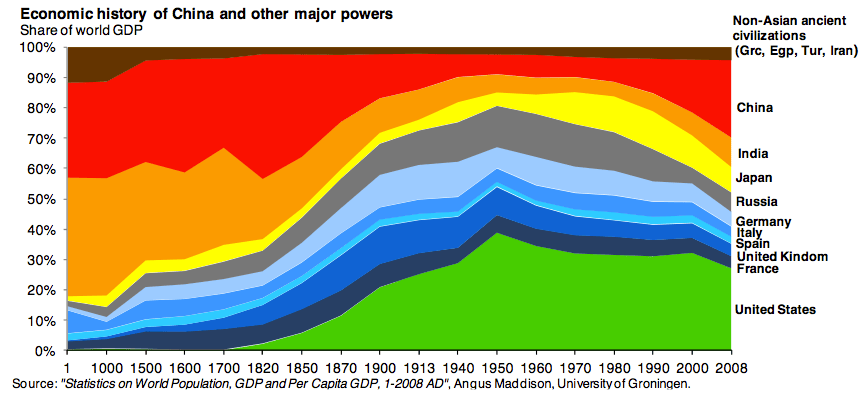
Both the WBG and the IMF were created during the final days of WW2 as the Allied Powers approached victory. The two organizations were outcomes of the 1944 Bretton-Woods Conference, an event which also saw the US dollar emerge as the world’s international reserve currency. The Conference has often been described as an event that elevated the United States to the status of an undisputed global superpower. The United States – as the only industrialized nation not damaged by war during WW2, as well as through the WBG and the IMF – was in a prime position to enjoy economic growth. This resulted in the United States dominating the world economy for most of the second half of the 20th century, as shown in Figure 2 below.

Figure 2: The United States dominated the global economy for most of the second half of the 20th century.
Source: The Atlantic

As seen from their mission statements above, both the WBG and the IMF seek to directly promote economic growth and stability, with reduction in inequality being an indirect consequence of achieving their goals. It is interesting to note that neither organization explicitly mentions reducing inequality in their mission statements.

Multilaterals have historically promoted American economic interests

An alternative approach to viewing the operations of the WBG and the IMF is one where the US seeks to advance its interests globally through both organizations. This view is reinforced through the following phrase from a dated New York Times article: ” … the US Treasury, which is viewed as the power behind the IMF.” Further, the US is the largest shareholder in both the WBG and the IMF. Through their programs and interventions, both the WBG and IMF seek to make each country lean more towards core American values of a liberal society and a capitalist economy (The New York Times). This makes sense when looking at history: every superpower always has had an interest in protecting its position by having other countries align with their economic interests. For example, the British Empire reinforced its superpower status by successfully colonizing 25% of the world’s population (Wikipedia). While this analogy does not hold true on military colonialism, it does serve as an historic example on how superpowers seek to hold onto their dominant status.

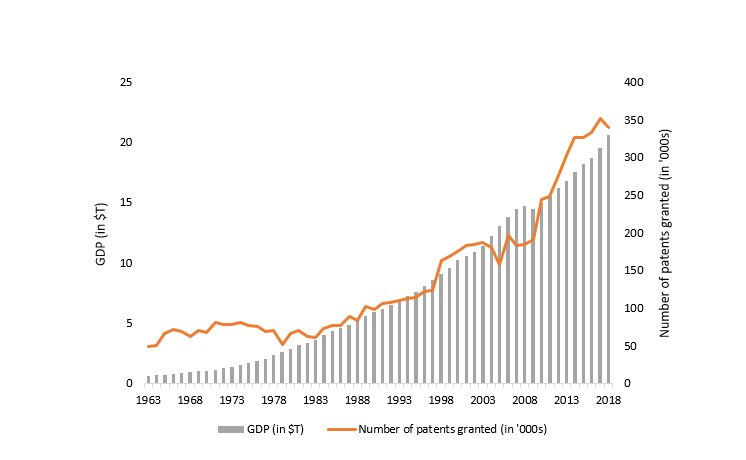
A key component of any successful capitalist economy has been the existence of legally-binding IP rights. This relationship is clearly seen in the historical economic success of the United States, especially post WW2. As Figure 3 shows below, we see a strong correlation between annual US GDP and number of patents granted annually in the US.

Figure 3: We see a strong correlation between annual US GDP and number of patents granted annually in the US.
Source: US Patent and Trademark Office and International Monetary Fund.
Note: Lack of USPTO data makes limits pre-1963 analysis.

Thus, from Figures 2 and 3, we are able to state the following: the United States was the leading nation contributing the most to the global economy post-WW2, and cemented its position by an aggressive use of IP rights. Further, the United States has been able to maintain its grip on the world economy through the WBG and the IMF.

The WBG and the IMF aren’t doing enough to reduce economic inequality

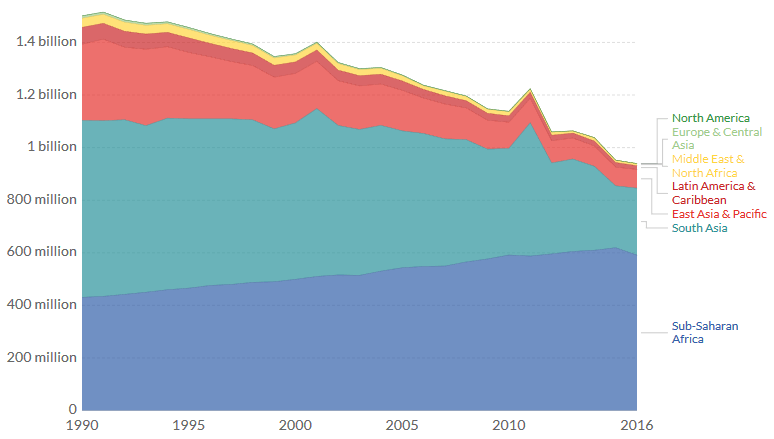
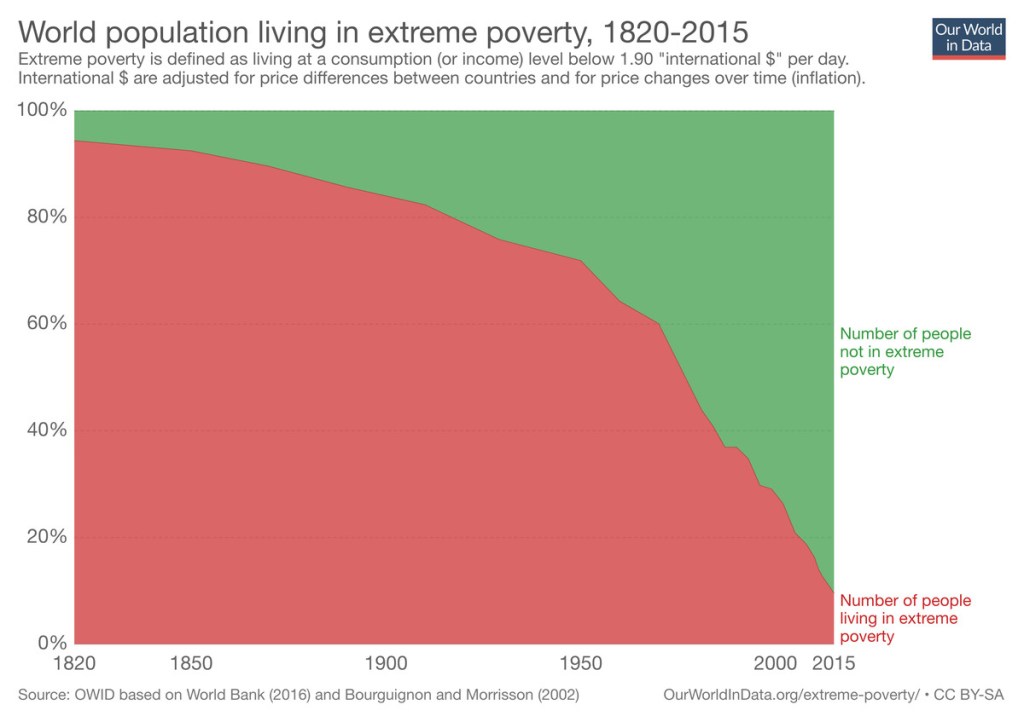
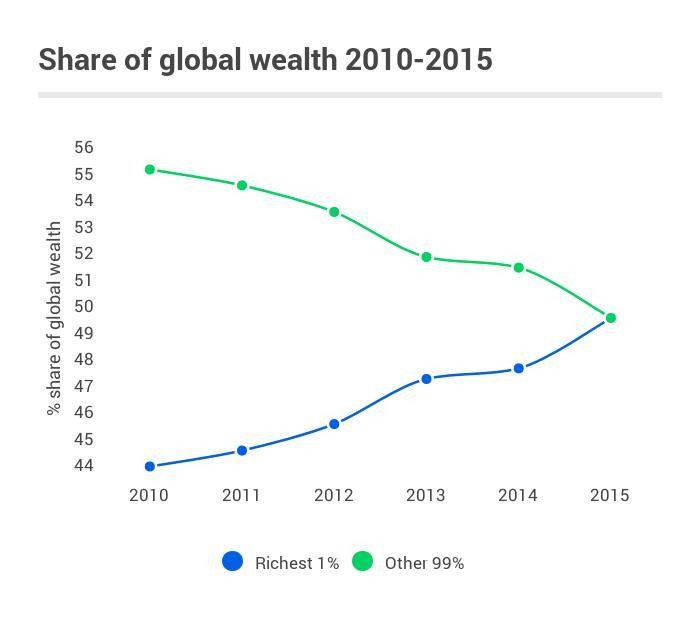
During this same time frame, we have seen two other important trends emerge. First, the number of people living in extreme poverty has reduced drastically. Second, despite this, the economic inequality gap has continued to widen. These two trends are shown in Figure 4 and Figure 5, respectively. Thus, while it is true that capitalism in its purist form (along with the enforcement of IP rights) has lifted millions of individuals out of poverty, it is also true that this very system continues to widen the inequality gap.

Figure 4: The number of people living in extreme poverty has drastically reduced over the last 65 years (1950 – 2015)
Source: OurWorldInData
Figure 5: The richest 1% have seen their share in global wealth increase over time, including over the last five years (2010 – 2015)
Source: World Economic Forum

The IMF, in its efforts to nudge countries to adopt capitalism in its purest form, has seen some interventions fail. An example discussed in class was of Jamaica. Over the last 41 years, the country has failed 11 of 15 IMF agreements (Jamaica Observer). Jamaica is not alone in this regard. Consider the case of Argentina, which has received 21 bailouts from the IMF. An IMF loan with its growth-inhibiting requirements was the main reason that brought down the Argentinian economy in 2001. Further, Argentina’s most recent bailout by the IMF is on the verge of collapse (The Financial Times).

The WBG has also seen projects being delayed and even entirely failing in their objectives. Specifically, projects supported by the WBG have displaced millions of individuals, particularly in Africa and in Asia (The Huffington Post). Once again, there is a failure to successfully accommodate individuals and communities in impoverished nations through multilateral interventions.

There are common trends that emerge in the failed bailout attempts of the IMF and in failed interventions by the WBG. This was discussed extensively in our class last week. Both multilaterals are often criticized for adopting a macro-led, top-down analysis of economies. Such an analysis does not work for smaller economies that are not as mature as that of the United States. Further, these economies suffer from issues of unreliable data collection and poor quality. Finally, impoverished nations may be unable to adopt most of the policy changes that come with such multilateral interventions. The IMF, in particular, is known for pushing aggressive policy changes in such countries. These include laying off public sector employees and raising taxes, including on the poor (Council on Foreign Relations). In light of such developments, is there an alternative approach for the WBG and the IMF to ensure that their interventions successfully reduce economic inequality?

Pursuing stakeholder capitalism through OSD

Recent trends point to a fundamental change in capitalism and what it stands for. The Business Roundtable, a non-profit whose members include the CEOs of the largest and the most powerful companies, recently denounced shareholder capitalism (i.e., capitalism in its “purist form”) in favor of stakeholder capitalism. (The New York Times) Simply put, stakeholder capitalism is an economic system where corporations and firms seek to serve the interests of all their stakeholders, not just their shareholders. The World Economic Forum’s Annual Meeting at Davos earlier this year also embraced the concept of stakeholder capitalism (World Economic Forum). Larry Fink, CEO of BlackRock, the world’s largest asset manager, recently stated that “a company cannot achieve long-term profits without embracing purpose and considering the needs of a broad range of stakeholders” (Larry Fink’s 2020 Letter to CEOs).

Multilaterals, including the WBG and the IMF, must pursue an alternative approach that seeks to promote stakeholder capitalism, and not simply shareholder capitalism, in order to effectively reduce economic inequality. This can be achieved through open source design (OSD) that offers solutions that work for individuals at the community level. A successful example brought to light in one of the class readings was of Aclímate Colombia. This intervention, made successful through government support, used open data to offer tailor-made solutions to the rice farming community across Colombia. The financial upside was enormous: $300M of losses were avoided.

Adopting a community-oriented approach through OSD, driven by open data, will promote tailor-made interventions that are more likely to succeed when compared to top-down, macro-level approaches. Such an approach is also likely to see increased buy-in from communities across the country, even if aggressive policy measures may need to be implemented. This buy-in is crucial to enable the success of planned interventions, and will ultimately see increased effectiveness in inequality reduction.

Conclusion

The WBG and the IMF still have a long way to go in supporting the effort to reduce economic inequality. Their traditional approach of incorporating top-down, macro-led solutions that align with US economic interests has not been as effective as envisioned. Both multilateral organizations must instead adopt an OSD approach, driven by open data, in order to democratize the effort to reduce economic inequality.

It is important to recognize that advocating for open data will be challenging. There are likely to be increased efforts and costs (e.g. time and resources), especially when working with countries that lack technological capabilities to do so. However, such an approach will likely see more community buy-in and more success in reducing economic inequality.

IP and OSD solutions compared

This blog seeks to compare intellectual property (IP) to open source design (OSD) as the two alternatives to determining the right-of-use of human-created solutions.

What is intellectual property?

IP refers to unique, value-adding creations of the human intellect that results from ingenuity, creativity and inventiveness. IP rights have been developed over the last 150 years and are a core component of capitalist societies. IP right holders have the right to exclude other players from using specific IP for commercial purposes.

IP enables entrepreneurs, start-ups and SMEs to protect themselves during different stages of growth. Specific IP rights, such as patents or trade secrets, enable smaller entities to gain access to much-needed capital to scale their operations. This access to capital enables firms to enjoy sufficient profits to re-invest in R&D, innovation and growth. Adopting an IP-oriented view of the world comes naturally to me, given my academic interests and work experience being in commerce.

What is open source design?

Open source design (OSD) refers to the development of technology and ideas without the retention of IP rights. Copylefts are key to OSD – these ensure that work generated through open source is open and free for anyone to use. OSD ensures free, open collaboration. OSD developed out of Silicon Valley and the tendency to openly share code with one another to design better software systems. Interestingly, the first time any code was prevented from being shared was in the 1980s with AT&T enforcing IP rights. I initially struggled to see the merit of OSD, particularly from the standpoint of scaling a new business.

OSD seeks to democratize innovation through open collaboration with the public. OSD is likely to invoke motivation at the higher end of Maslow’s hierarchy of needs, namely esteem and self-actualization. The underlying theme here is one of bringing a community together to solve a problem; the community could in fact be each and every person around the world. The primary benefit of OSD is to gain multiple perspectives to a problem and to openly collaborate with one another. There is also a sense of seeking to correct global inequality through OSD.

Critics of IP and OSD

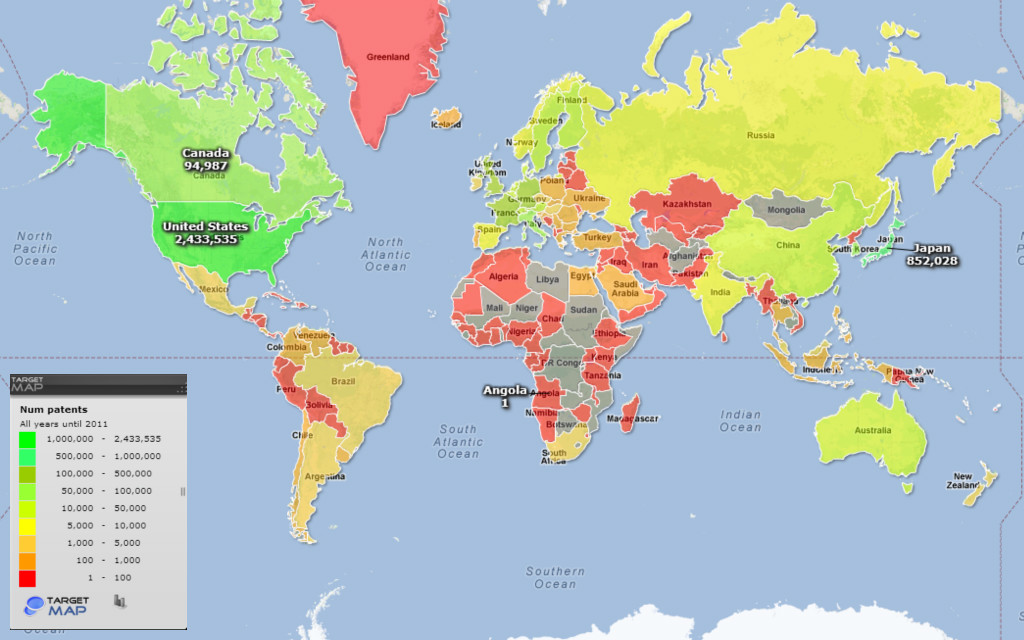
Critics of IP point to the system’s lack of fair distribution of innovation across the globe. There is an accumulation of knowledge, resources and capital amongst certain countries. Consider Figure 1 below, which shows that LATAM, Africa, Eastern Europe and the Middle East barely own any patents, with this trend projected to continue.

Figure 1: Number of patents owned per country, as of 2011 (Target Map)

Further, IP rights were initially set up to protect individual creativity rights; however, a majority of IP rights today are held by corporations. Finally, securing patents is an extremely time-consuming and resource-intensive process. For instance, securing a patent can quickly cost more than $15,000 if the patent is “complex” to “highly complex” (IP Watchdog). This can often prove very expensive for inventors and individual entrepreneurs who lack such resources. Thus, we see that there definitely is a lack of democratization of innovation, as innovation is concentrated in previously wealthy / technologically-advanced countries.
An increasing number of customers and product / service users are demanding a transition to OSD. IP critics point that failing to ride this wave can prove detrimental to a firm’s success. Instead, they advocate for companies to transition their product and service offerings to OSD, as seen in the case with HP’s e-speak (HBR). Firms can also have the option to have their strategy developed through OSD. This is seen in the case with Wikipedia (HBR), where users and contributors were invited to openly participate in shaping the company’s next five-year strategy. This enables all stakeholders to be involved in key decision-making initiatives of organizations, particularly customers. This is important as such initiatives can reduce customer acquisition costs and increase customer lifetime value.

Critics of OSD are quick to point to the lack of competition it creates, by using the argument that a lack of competition stifles innovation. Thus, OSD is likely to see lower innovation at the idea-stage. Further, there is a consistent fear of imitation / replication of products and services manufactured using OSD. This can potentially erode huge amounts of a company’s value by neglecting the need for a differentiated brand. For instance, the Coca-Cola brand was recently valued at $73.1 billion, roughly 35% of the company’s market cap (Forbes). IP enables Coca-Cola to protect both its brand, as well as its secret formulas, from being replicated by other beverage manufacturers. In an open-source world, Coca-Cola would unlikely capture the additional value of being a differentiated brand, and may in fact see a decline in firm value due to the prevalence of imitation brands. Finally, even if the world entirely adopts OSD principles to design products and services, execution of designs (where all the value will lie) will be dominated by incumbents who have access to tools and technology required. As the world enters the Fourth Industrial Revolution, Big Tech will continue to profit due to the digital tools (AI, ML, quantum computing) at their disposal. Thus, OSD is unlikely to dramatically push the needle on solving global inequality.

An interesting observation through class discussions, readings and conversations with Prof Etienne is on the motivation of the critics of each system. Critics for both systems can be defined by the region / economic setting that their proposed solution (i.e. product or service will be implemented). Critics of IP support solutions that are often meant to be implemented in the developing world: there seems to be a sense of OSD offering a way to correct the wrongs of imperialism and colonialism and its modern extension through IP concentration in the West. Critics of OSD, on the other hand, often support solutions that are primarily created for the developed West: their ultimate goal seems to be the protection of their dominant position in the global economy, as seen in figure 1.

The next few decades will prove interesting in determining the true drivers of the IP v OSD debate. As developing economies secure developed economy status – for instance, China plans to become an advanced economy by 2049, as well as the world’s largest economy (The Atlantic). As global economic roles switch, would we see OSD advocates increasingly from the developed West?

Conclusion

The discussion above suggests that solely adopting either of IP or OSD is unlikely to benefit the world. Solely adopting IP is likely to further widen the gap between the haves and the have-nots. Solely adopting OSD may prove to be the “right thing to do”, but will have severe consequences on global growth. As Vice points out, relying completely on OSD – particularly open source software – drives the burnout of contributors. There is a free-rider problem, where individuals and companies make use of open source software without “giving back enough”. This is termed as user entitlement; thus, in a pure OSD world, the number of users as well as their development requests far outweigh the number of contributors, leading to contributor burnout, which in turn can compromise the entire open source solution. A key example of the consequences of contributor burnout can be seen in the case of Heartbleed, a bug in OpenSSL, which essentially gave hackers open access to users’ personal information.

Thus, we need a middle ground that incorporates beneficial components of IP and OSD. For instance, OSD can be leveraged to successfully collaborate on innovation at the idea-generation stage, while IP should be leveraged to protect entrepreneurs and firms who seek to deliver this innovation on the world stage. IP is required here given the capitalist nature of today’s world; entrepreneurs and firms are unlikely to succeed if OSD is extended to the delivery stage. This approach has been successfully adopted by firms such as Tesla and Dropbox. Tesla has released all of its patents as open source, effectively meaning that any individual or organization is free to use its patents to develop electric vehicles. It’s interesting to note that Tesla still owns the trademark to its brand, most likely to build brand value as identified in the Coca-Cola example above. Dropbox has adopted a hybrid approach of using core OSD technology and leveraging IP rights to protect its own unique offerings.

However, a key exception to the above must be on issues that pose a threat to humanity. For instance, OSD should almost exclusively be leveraged to develop and execute solutions to tackle climate change. This has the potential to cause severe harm to humanity by the end of the 21st century if not addressed.

Note: blog updated on 2/3 to reflect changes recommended by Laura.

Design a site like this with WordPress.com
Get started