Poverty continues to be a critical issue facing Sub-Saharan Africa (SSA). This is the region that lies below the Saharan desert and includes 46 African countries; countries lying in North Africa are excluded. Estimates indicate that by 2030, despite improvements in the global fight against poverty, 9 of 10 extremely poor people will live in SSA (see Figure 1). The extreme poor are defined as individuals who live below $1.90 or less per day.
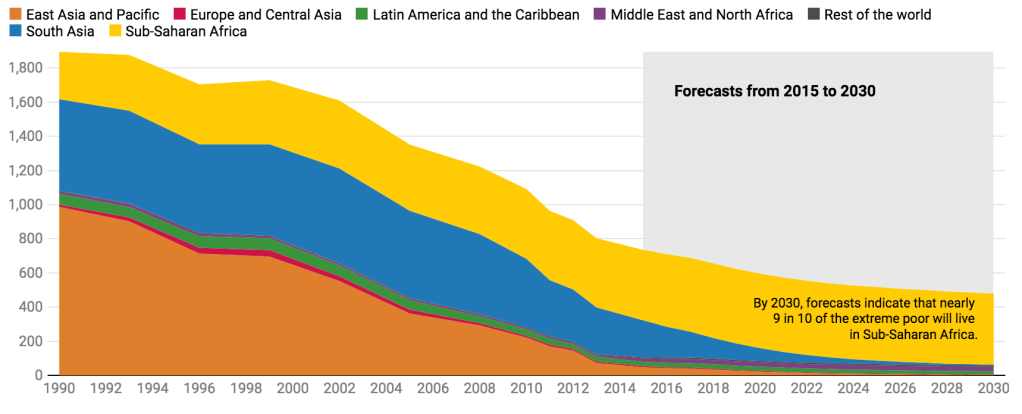
By 2030, forecasts indicate that nearly 9 in 10 of the extreme poor will live in SSA
Source: World Bank
This blog discusses the structural economic problems that SSA faces and how open source can improve agricultural productivity in the region in order to mitigate these problems.
SSA faces structural economic problems
Nearly 54% of the working population in SSA is reliant on agriculture as their primary source of employment. However, agriculture only contributes to roughly 16% of the region’s GDP. There is a clear gap between employment and economic value creation. It is unlikely for SSA’s reliance on agriculture to decrease in the short and medium-term. Both manufacturing and service sectors will see significant decreases in labor intensity, driven by automation, 5G and the Fourth Industrial Revolution. Thus, agriculture will likely continue to employ a significant proportion of the SSA population in the medium-term.
Additionally, SSA is likely to face significant economic growth hurdles in the future, as explained by Chris Hamilton. Global population growth is forecasted to be driven primarily by countries in SSA (notable exceptions include South Africa). However, despite driving population growth, SSA will struggle to achieve per-capita economic growth required to support a growing population (see Figure 2). There are many drivers which limit per-capita economic growth in SSA, such as inefficient capital allocation. It is important to note that a country’s per-capita economic growth must at least match or exceed population growth to ensure sustainable economic growth over time. Further, as countries around the world grow and achieve developed-economy status, their economic growth rates will continue to decline. Thus, the onus lies with low-income regions like SSA to ensure that global economic growth can be sustained and even increased in the future.
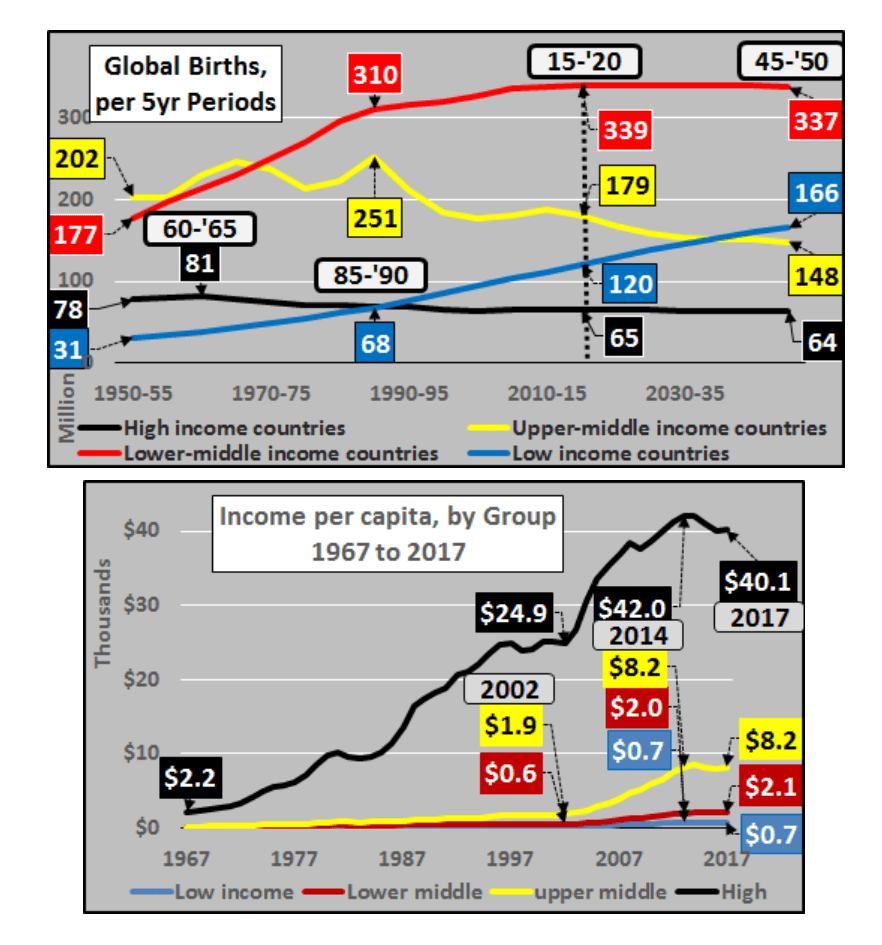
Despite driving global population growth, SSA will struggle to achieve economic growth per capita required to ensure sustainable economic growth over time
Source: Chris Hamilton
From the above arguments, we can conclude that strong improvements in the economic productivity of agriculture will significantly boost SSA’s per-capita economic growth. This will help support global economic growth going forward. Before exploring potential solutions, we will explore the challenges faced by smallholder farmers (SHFs) that limit SSA’s agricultural productivity.
SHFs in SSA suffer from a lack of information
Opportunities for SHFs are often limited due to inefficient agricultural practices as well as a lack of coordinated efforts amongst themselves. Inefficient agricultural practices, motivated by traditional farming methods, do not offer sufficient yield to support a growing population, especially in light of the effects of climate change. As a result of these low yields, agriculture in Africa remains far less productive than the world average (see Figure 3). This has serious implications going forward: Africa will be unable to feed its own growing population, and will need to resort to expensive imports, creating a deeper dent in the region’s economic growth. There is also a lack of coordination amongst SHFs to align production to meet rising crop demand. This is primarily driven by the fact that SHFs in developing regions, by definition, are characterized by a high degree of geographic dispersion.
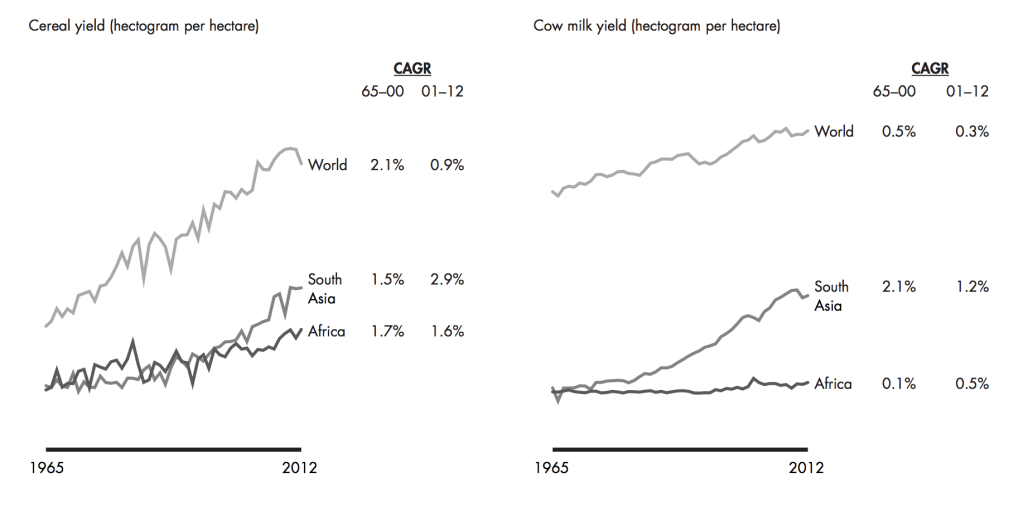
Agriculture in Africa remains far less productive than the world average
Source: Acumen
It is key to note that both factors identified above have a common root cause: inadequate access to relevant information. Examples include information on weather patterns, planting cycles and competitive prices for harvests. This creates a knowledge gap, which further reinforces the first two challenges. This knowledge gap can be detrimental to SHFs, particularly as the effects of climate change continue to unwind. A key example of this is seen in the near 200% rise in onion prices in India brought on by massive flooding during the 2019 monsoon season (see Figure 4).
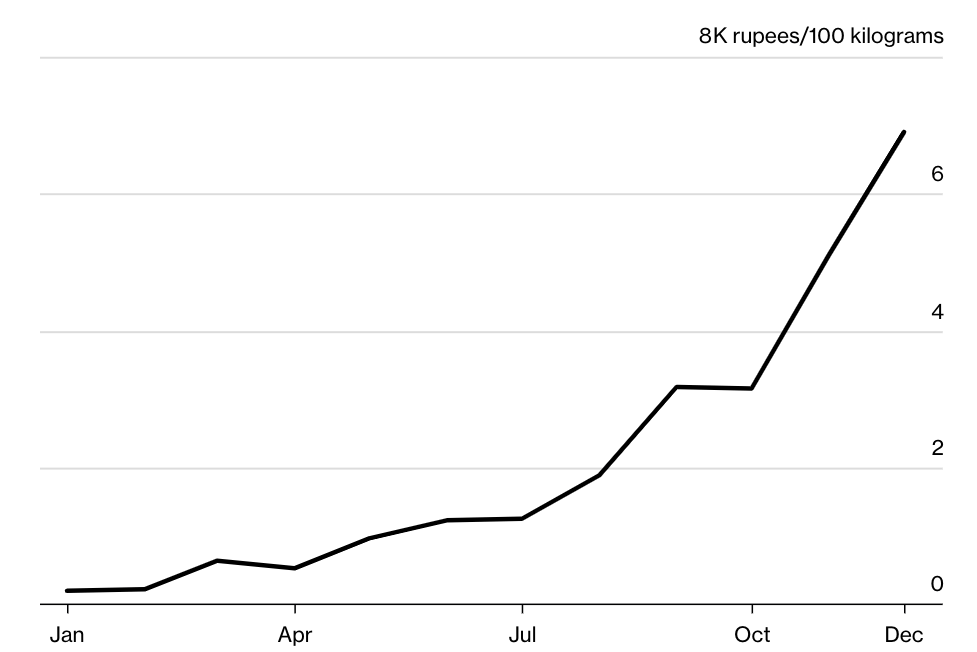
Exponential rise in onion prices in India was driven by supply shortages due to massive flooding
Source: Bloomberg
Thus, there is a clear need for the agricultural sector in SSA to contribute more towards the region’s economic growth. Offering SHFs access to information, based on open source principles, will put them in a better position to improve their economic productivity from agriculture. Aclímate Colombia serves as a successful example that effectively leverages such an open source tool.
Aclímate Colombia: an open data success story
Aclímate Colombia is a cross-sector initiative led by the International Center for Tropical Agriculture (CIAT). CIAT involves both private and public sector participants, and is key in securing necessary buy-in from corporates. The initiative seeks to promote open access to data for SHFs involved in rice cultivation. Rice productivity in Colombia had decreased from 6 to 5 tons per hectare, primarily driven by climate change. Without a successful intervention, rice yield in Colombia is likely to have continued this downward spiral, hurting hundreds of farmers. However, Aclímate Colombia’s success prevented this from happening. In fact, estimates suggest that some $300M in losses amongst 179 farmers were avoided by successfully leveraging open data from this initiative. One can only imagine the economic benefits that can be realized by SSA’s 33 million SHFs!
There are several key stakeholders involved in ensuring Aclímate Colombia’s success along each step of the initiative, as illustrated in Figure 5:
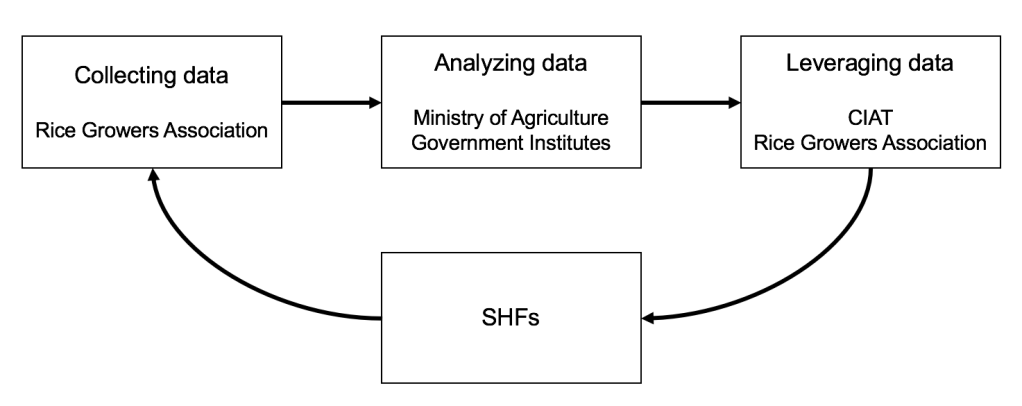
Several key stakeholders contribute to Aclímate Colombia’s success along each step of the initiative
- Collecting data: this is conducted at the farm-level, where the Rice Growers Association is able to tap into its vast network of rice-farmer cooperatives
- Analyzing data: this is led by government departments, agencies and institutes and ensures that farmers’ data is kept out of private hands
- Leveraging data: this is done by CIAT to ensure private sector buy-in, and also by the Rice Growers Association to deliver insights directly to farmers
It is key to note that open-source principles exist within each step of the process highlighted in Figure 5. This is key to ensure that data collected at the farm-level is made open for analysis, and also open for interpretation and communication back to the SHFs. There is no intellectual property involved that seeks to monetize the farmers’ data.
Additional factors will reinforce success in SSA
Buy-in from SHFs, the initiative’s primary beneficiary, is perhaps the most important factor that drives Aclímate Colombia’s success. Without this, the whole initiative would have failed. There are nuances involved when engaging with SHFs that will likely improve their adoption of such initiatives. As Figure 6 suggests, communicating the wealth increase benefits of interventions to SHFs will significantly improve their buy-in.
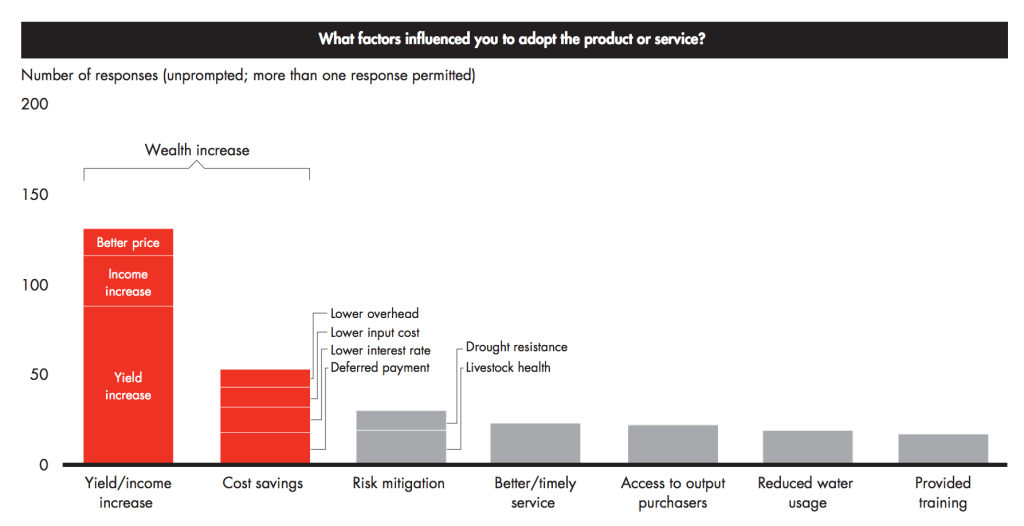
SHFs are more likely to adopt new interventions if wealth increase benefits are explicitly communicated to them
Source: Bain & Company
Additionally, the initiative must secure feedstock demand from both the private sector and the government. This will enable the open source tool to achieve scale, creating even greater economic benefits for SHFs. Finally, a comprehensive legal review must be conducted to ensure that data treatment does not violate the privacy rights of SHFs. Such laws may not exist in some countries and regions in SSA. A potential solution is to leverage best practices from more exhaustive and progressive data protection legislation, such as the EU’s GDPR.

